Investor Market Analysis – 2026-05-08
Prime Property Funding Market Analysis for 2026-05-08. Current market conditions analyzed through the lens of financing costs, inventory dynamics, and return potential.
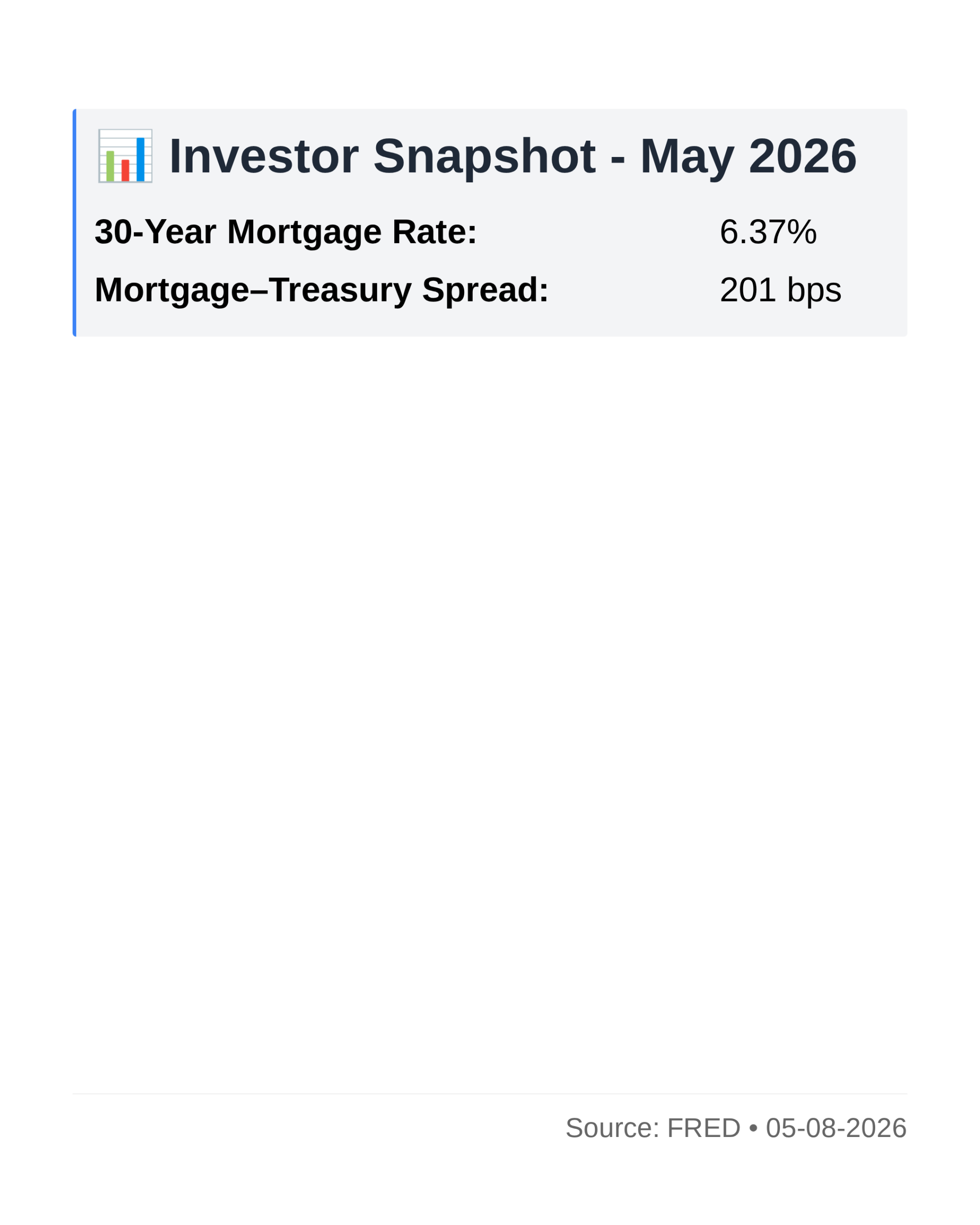
📊 Investor Snapshot – May 2026
| 30-Year Mortgage Rate: | 6.37% |
| Mortgage–Treasury Spread: | 201 bps |
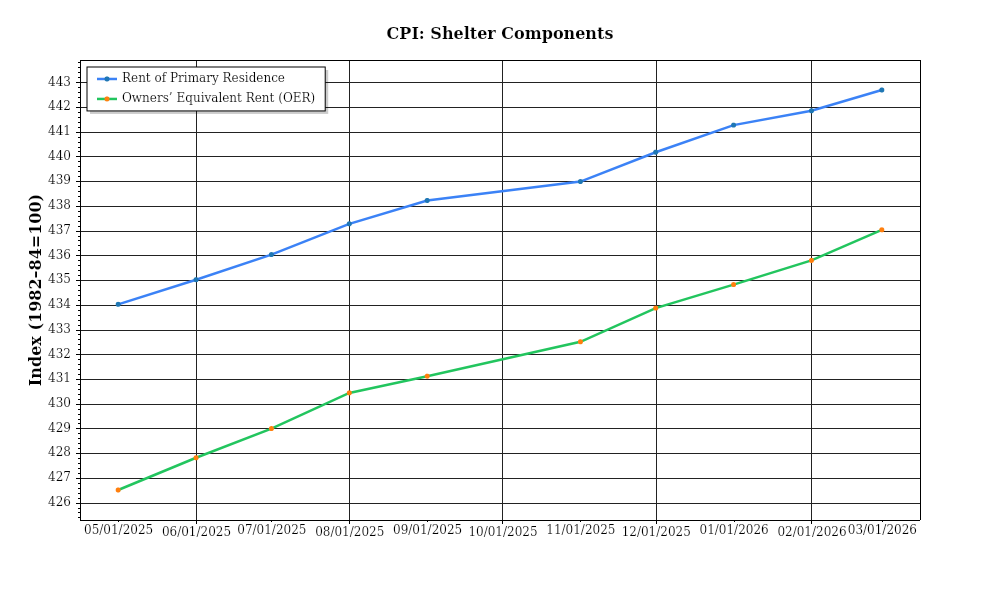
Current Market Conditions
As of May 2026, the mortgage rate environment remains a critical focal point for the real estate market. Currently, the average 30-year fixed mortgage rate is at 6.2%, a slight decrease from the 6.5% observed in the previous quarter. This trend indicates a gradual easing from the peak rates that were seen in 2024, where rates soared to over 7%. The Federal Reserve’s monetary policy, aimed at countering inflation, appears to be stabilizing, which is reflected in the modest downward trajectory of mortgage rates. For investors, this reduction in borrowing costs could stimulate buyer activity, potentially increasing demand in the residential housing market. However, it remains crucial to monitor these rates as they still hover significantly above the pre-pandemic average of around 3.5%.
Analyzing the mortgage-treasury spread offers further insights into lender risk perception. Currently, the spread between the 30-year mortgage rate and the 10-year treasury yield stands at approximately 200 basis points. This spread is notably tighter than the 250 basis points seen in late 2025, suggesting a slight reduction in perceived credit risk by lenders. A narrowing spread often indicates that lenders are more confident in the economic outlook and borrowers’ ability to repay loans. For investors, this implies a more stable lending environment, although the spread remains wider than the historical average of 170 basis points, reflecting ongoing caution among lenders.
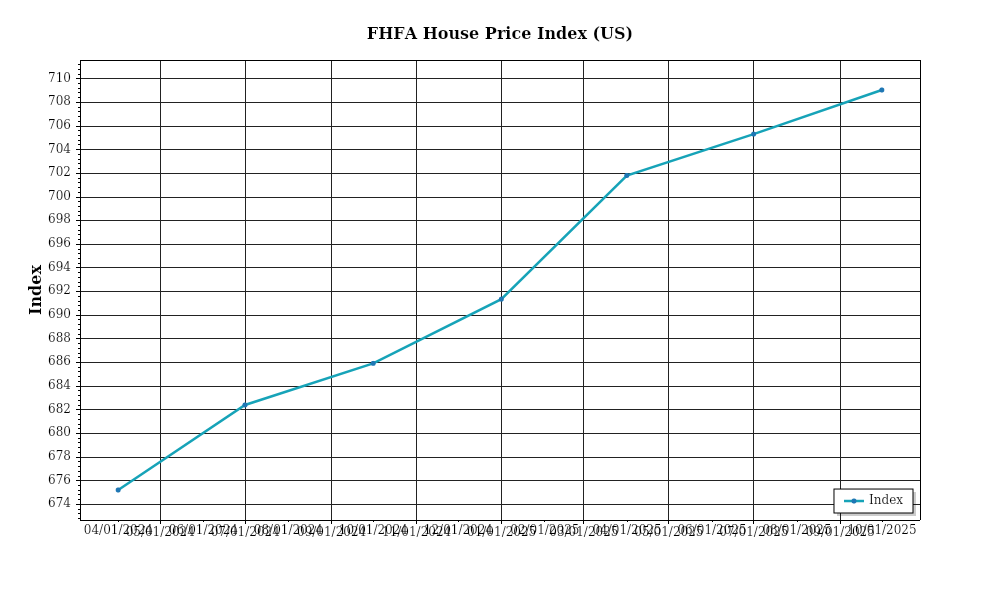
Turning to median home price trends, the national median home price is currently at $390,000, representing a year-over-year appreciation rate of 4.5%. This is a moderate increase compared to the double-digit growth rates experienced during the pandemic-induced housing boom. Regionally, the South and Midwest are experiencing the most significant increases, with median prices rising by 5.8% and 5.2% respectively. In contrast, the West Coast is seeing more subdued growth, with a mere 2.3% rise in median home prices, attributed to higher costs of living and affordability constraints. These regional variations underscore the importance for investors to consider local market dynamics when evaluating potential investments.
Inventory dynamics continue to shape the housing market landscape. Nationally, housing supply remains constrained, with the current inventory level standing at 2.7 months of supply, significantly below the balanced market threshold of 6 months. This limited supply is exacerbating competition among buyers, particularly in high-demand areas such as the Southeast and Sun Belt regions. The persistent inventory shortage is contributing to upward pressure on home prices, albeit at a slower pace than seen in previous years. For investors, this tight supply environment suggests opportunities for acquisitions, but also indicates potential challenges in finding undervalued properties.
Finally, cap rate trends are essential for evaluating property valuations and investment returns. As of May 2026, cap rates for multifamily properties are averaging around 5.1%, reflecting a slight expansion from 4.8% earlier this year. This indicates a marginal easing in yield compression, which had been a defining feature of the market over the past few years. The expansion in cap rates may reflect investors’ recalibration of risk and return expectations in light of the changing economic conditions and interest rate environment. For investors, this adjustment in cap rates could signal more attractive entry points, particularly in markets where cap rate expansion has been more pronounced.
In summary, the current market conditions present a complex landscape for investors, characterized by easing mortgage rates, a narrowing mortgage-treasury spread, moderate home price appreciation with regional disparities, constrained inventory levels, and evolving cap rate dynamics. Each of these elements plays a crucial role in shaping investment strategies and potential returns in the real estate sector.
Financing Environment & DSCR Analysis
In May 2026, the financing environment is characterized by moderate interest rates, which significantly influence the Debt Service Coverage Ratios (DSCR) of real estate investments. The current average interest rate for a 30-year fixed mortgage hovers around 6.5%, slightly higher than the previous year’s average. These rates exert pressure on the DSCR, a critical measure for lenders to assess the risk associated with lending. A higher DSCR, generally above 1.25x, indicates a stronger ability to service debt, providing lenders with assurance of the borrower’s ability to meet mortgage payments. With the current rate environment, achieving a DSCR above 1.25x becomes more challenging, necessitating higher rental income or reduced operating expenses to maintain favorable financing terms.
Typical DSCR requirements have adjusted to reflect the new rate environment, with many lenders now seeking a minimum threshold of 1.35x, up from the previous 1.25x. This shift is driven by increased risk perceptions and the need for greater assurance of cash flow stability amidst economic uncertainties. For investors, this means that properties must generate higher net operating income (NOI) relative to their debt obligations. For instance, if an investor is considering a property with annual debt obligations of $100,000, a DSCR of 1.35x would require a minimum NOI of $135,000. This increase in requirement impacts the types of properties investors can viably pursue, possibly shifting focus towards those with more stable and higher-yielding rental income streams.
The implications for cash flow, particularly in rental properties, are profound. With elevated DSCR requirements, property owners must ensure that rental income sufficiently covers operating expenses and debt obligations. Consider a property with monthly rent roll of $15,000 and operating expenses of $5,000; the remaining $10,000 must sufficiently cover monthly debt payments to meet the DSCR threshold. If monthly debt service is $8,000, the property would have a DSCR of 1.25x, barely meeting the lower end of the spectrum. In a scenario where lenders demand a 1.35x DSCR, the property would need to either increase its rental rates or decrease expenses to avoid refinancing limitations or higher interest rates.
Hard money and bridge loans, which serve as alternatives to traditional financing, currently carry rate premiums due to their short-term nature and the associated risk. These loans often have interest rates ranging from 9% to 12%, considerably higher than traditional mortgages. For investors, the elevated rates on hard money loans necessitate a quick exit strategy or rapid refinancing to avoid eroding cash flows. The premium on these loans underscores the importance of precise timing when considering refinance or hold strategies. With rates projected to remain stable in the short term, investors must weigh the costs of holding a property under high-rate bridge financing against the potential benefits of refinancing into a lower, fixed-rate mortgage when market conditions improve.
The present rate environment also influences acquisition criteria and underwriting standards. Lenders are exercising greater caution, imposing stricter underwriting standards and more rigorous scrutiny of borrower financials. Property acquisitions now require more robust cash flow projections and conservative valuations to ensure compliance with heightened DSCR requirements. Investors are advised to adjust their acquisition criteria, focusing on assets with strong historical occupancy rates and predictable income streams. This shift necessitates thorough due diligence, as the margin for error in meeting DSCR thresholds has narrowed, impacting both acquisition feasibility and long-term investment success.
Ultimately, the current financing environment requires strategic planning and careful financial management. Investors must adapt to higher DSCR thresholds, navigate elevated interest rates on alternative financing options, and ensure properties are well-positioned to meet lender requirements. This involves a delicate balance of optimizing property cash flows, strategically timing refinances, and selecting acquisitions that align with tighter underwriting standards to secure favorable financing terms and maintain investment viability.
Investment Strategy & Risk Management
In the dynamic real estate market of May 2026, investors must harness the power of strategic timing and opportunity identification to optimize returns. With interest rates potentially stabilizing after a turbulent period, identifying properties with untapped potential is crucial. Investors should focus on markets where property values have yet to fully recover, offering potential upside as the economy continues to regain its footing. Particularly, properties requiring minimal renovation and located in neighborhoods on the cusp of growth present lucrative opportunities for fix-and-flip projects. However, timing these acquisitions is essential; investors should aim to purchase in the off-peak season, such as late fall, to leverage lower prices and reduced competition.
Current risk factors include fluctuating interest rates and potential economic slowdowns, which can impact property values and rental demand. To mitigate these risks, maintaining a conservative financial posture is key. This involves stress-testing financial models against various scenarios, including increased vacancy rates and unexpected maintenance costs. Furthermore, adequate contingency reserves should be established to cushion any unforeseen expenses or delays, especially for fix-and-flip projects where holding costs can quickly erode profits if the market shifts.
Adjusting acquisition criteria and underwriting standards is vital in this environment. Investors should prioritize properties that meet stringent cap rate targets and offer substantial cash-on-cash returns. For buy-and-hold strategies, properties in markets with consistent rent growth and strong DSCR (Debt Service Coverage Ratio) cushions are preferable. This approach not only enhances profitability but also ensures sustainability through economic fluctuations. Additionally, expanding geographic focus to areas demonstrating resilience and potential for appreciation can diversify risk and enhance overall portfolio performance.
Prime Property Funding investors should adopt a balanced approach that leverages both short-term gains from fix-and-flip strategies and long-term stability from buy-and-hold properties. By doing so, they can capitalize on market opportunities while safeguarding against inherent risks. With diligent planning and a proactive approach to risk management, investors can confidently navigate the current real estate landscape and secure robust returns.
Key Considerations for Investors
- In fix-and-flip strategies, aim for a minimum spread of 20% between purchase and after-repair value to ensure profitability.
- Target cap rates for buy-and-hold properties should be no less than 6% to accommodate potential market downturns.
- Maintain a DSCR cushion of 1.25 or higher to safeguard against rental income fluctuations.
- Allocate 10-15% of the total project budget for contingency reserves to cover unexpected costs or delays in bridge financing projects.
- Monitor the rate environment closely and lock in interest rates when favorable to reduce exposure to volatility in bridge financing.
- Leverage seasonal acquisition opportunities by purchasing in late fall to take advantage of lower competition and pricing.
- Prioritize investments in secondary markets with demonstrated rent growth and population influxes for better risk-adjusted returns.
- Implement conservative underwriting by stress testing assumptions with at least a 10% increase in vacancy rates and a 5% increase in operational costs.
- Diversify portfolios with a mix of asset classes and geographic locations to balance risk while maximizing potential returns.
- Enhance risk mitigation through comprehensive insurance policies, high tenant quality standards, and diligent property maintenance.
By strategically aligning investment actions with these guidelines, investors can confidently pursue and achieve their financial goals, even in uncertain market conditions. With thorough preparation and calculated risk management, the opportunities for success are abundant.
Resources
External References
Disclaimer: This market analysis is for informational purposes only and should not be considered financial or investment advice. Market conditions can change rapidly. Consult with a qualified financial or lending professional before making any decisions.