Investor Market Analysis – 2026-04-26
Prime Property Funding Market Analysis for 2026-04-26. Current market conditions analyzed through the lens of financing costs, inventory dynamics, and return potential.
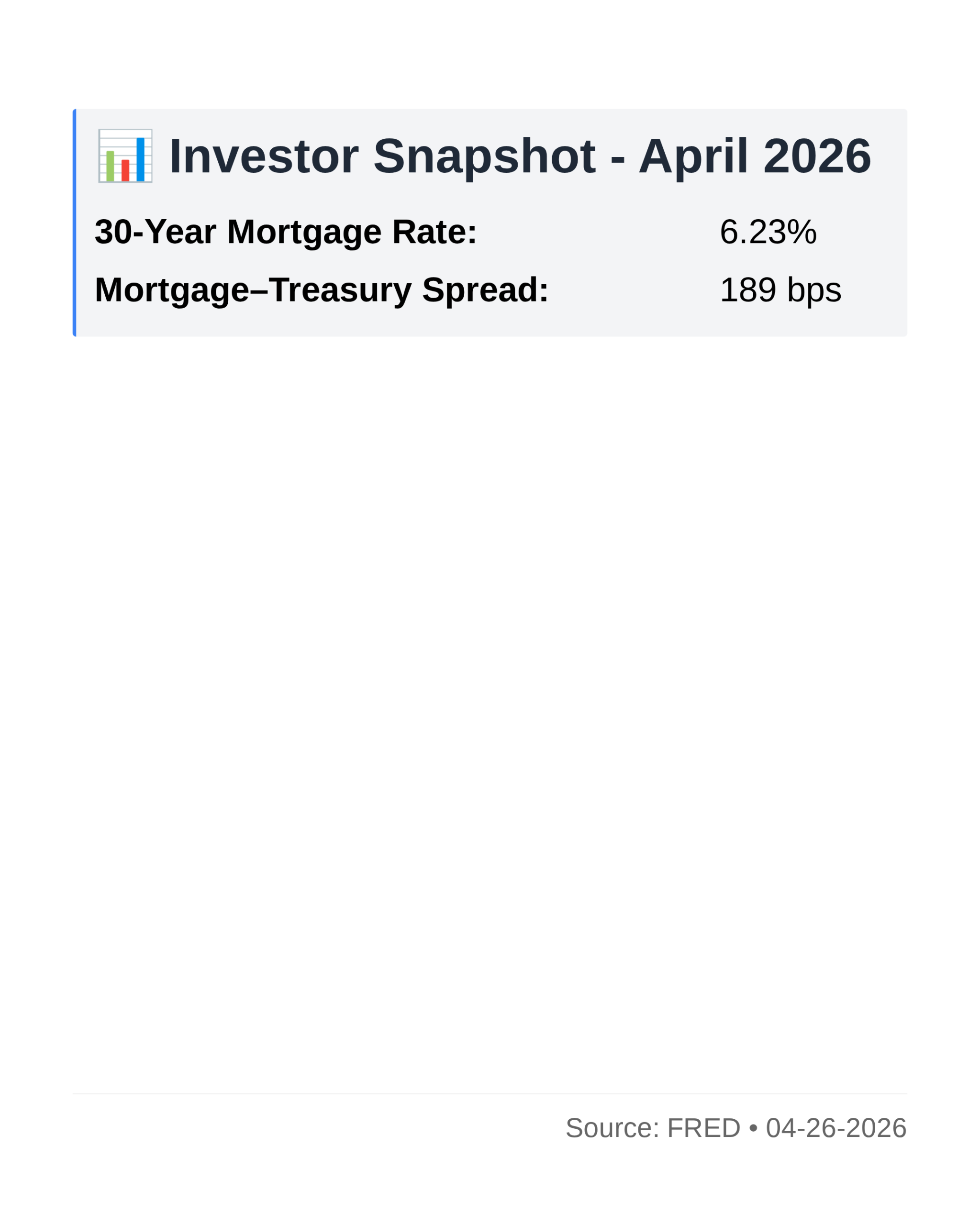
📊 Investor Snapshot – April 2026
| 30-Year Mortgage Rate: | 6.23% |
| Mortgage–Treasury Spread: | 189 bps |
Current Market Conditions
As of April 2026, the mortgage rate environment remains a key driver of the real estate market dynamics. Currently, the average 30-year fixed mortgage rate stands at 6.25%, reflecting a modest increase from 5.75% in October 2025. This upward trend can be attributed to the Federal Reserve’s monetary policy adjustments aimed at curbing inflation, which has persistently hovered above the target rate of 2%. The past six months have seen a 50 basis point increase, suggesting a cautious trajectory towards further tightening. For investors, this implies higher borrowing costs, potentially cooling off the overheated housing market seen in previous years. However, the rate is still below the historical average of 7%-8%, indicating that financing remains relatively affordable in a long-term context.
The mortgage-treasury spread, which is a crucial indicator of lender risk perception, currently stands at 180 basis points, slightly wider than the five-year average of 150 basis points. This spread has widened by 30 basis points since last year, signaling increased caution among lenders. The widening spread suggests that lenders perceive greater risks in housing market investments, likely due to economic uncertainties and potential policy changes. For real estate investors, a wider spread can indicate that lenders are demanding higher returns for perceived risks, which may reflect broader concerns about economic stability or anticipated market corrections.
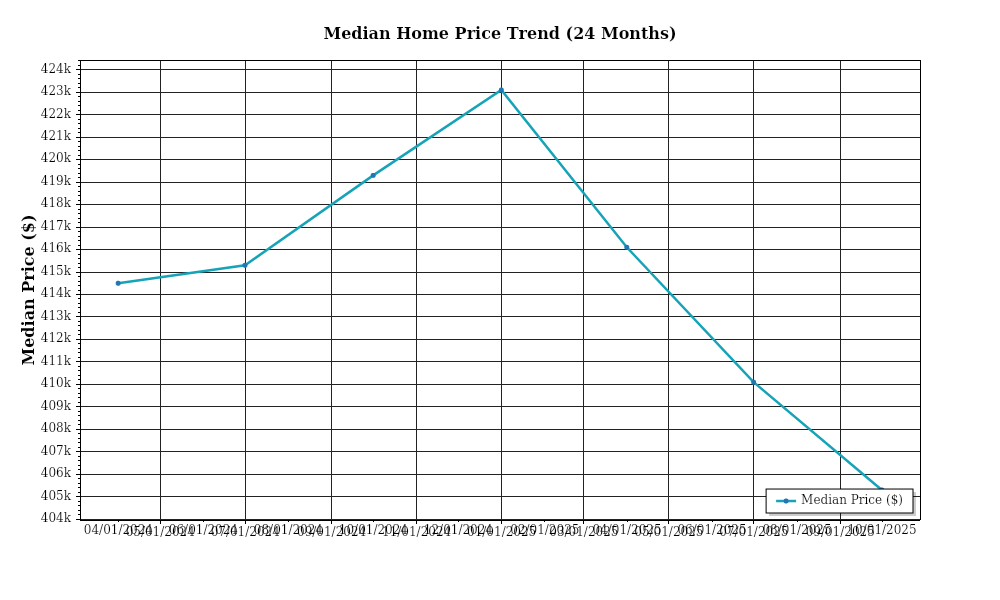
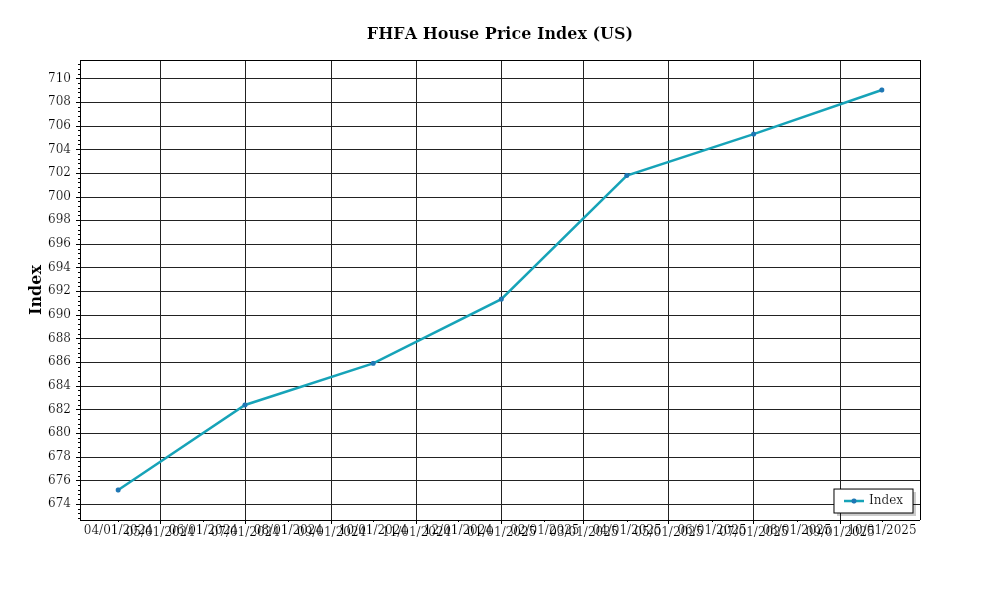
In terms of median home price trends, the national median home price is currently at $450,000, which represents a 4.5% year-over-year increase from $430,000 in April 2025. This appreciation rate, although positive, is a slowdown compared to the 8.2% annual increase observed in the prior year. Regional variations are significant, with the Midwest experiencing a modest rise of 2.3%, while the Sun Belt states continue to see robust growth at 6.8%. The slowdown in appreciation rates can be attributed to rising mortgage rates and inflationary pressures, which have started to temper buyer demand. For investors, this indicates a shift towards a more normalized market, with potential opportunities in regions still experiencing high growth rates.
Inventory dynamics are undergoing notable shifts, with total housing inventory at 1.4 million units, reflecting a 10% year-over-year increase. This increase in supply is primarily driven by a rise in new construction completions and a slight uptick in existing home listings as homeowners attempt to capitalize on high market valuations. Despite the increase, the market remains slightly tilted towards sellers, with inventory levels still below the pre-pandemic average of 1.8 million units. The months of supply — a measure of how long it would take to sell all homes on the market at the current sales pace — is at 3.5 months, up from 2.8 months last year, indicating a move towards a more balanced market. For investors, the increased inventory suggests more opportunities for acquisition but also heightened competition, particularly in high-demand areas.
Cap rate trends are also influencing investor decisions. Currently, cap rates have compressed slightly to an average of 5.2% from 5.5% a year ago, driven by strong rental demand and sustained investor interest in income-producing properties. This compression indicates that property valuations are high relative to the income they generate, reflecting investor confidence in future rental growth and asset appreciation. However, as borrowing costs rise, the potential for further cap rate compression may be limited. Investors should be cautious of over-leveraging in such an environment, as the yield on new acquisitions may not sufficiently cover increased financing costs unless rental income grows proportionally.
Financing Environment & DSCR Analysis
As of April 2026, the current interest rate environment is having a significant impact on Debt Service Coverage Ratios (DSCR). With interest rates hovering around 5.5% for conventional mortgages, up from 3.5% in the previous few years, the cost of borrowing has increased, making it more challenging for investors to meet optimal DSCR requirements. Lenders are typically requiring a DSCR of at least 1.25x to 1.35x in this climate, with more conservative institutions leaning towards the higher end of this spectrum. This shift places pressure on investors to ensure that their properties can generate sufficient rental income to cover increased debt obligations.
The implications for rental property cash flows are substantial. For instance, consider a rental property with a monthly gross rental income of $10,000. Assuming operating expenses of $3,000, the net operating income (NOI) would be $7,000. If the monthly mortgage payment at a 5.5% interest rate is $5,500, the DSCR would be calculated as $7,000 / $5,500 = 1.27x. While this satisfies the lower threshold requirement of 1.25x, it leaves little room for unforeseen expenses or vacancies. Should interest rates rise further or rental income decrease, the DSCR could quickly fall below acceptable levels, highlighting the importance of maintaining a cushion in cash flow projections.
In response to these challenges, many investors are turning to hard money and bridge loans, despite their higher rate premiums. These short-term financing solutions often come with interest rates ranging from 8% to 12%, reflecting a significant premium over traditional financing. While more expensive, these loans offer flexibility and speed, allowing investors to quickly close deals and execute value-add strategies. However, the higher cost necessitates a careful analysis of potential returns to ensure the increased borrowing expense can be justified by anticipated property appreciation or rental growth.
Given the current rate environment, the timing of refinancing versus holding strategies becomes crucial. Investors with properties purchased at lower interest rates may opt to hold onto their existing financing to avoid the higher costs associated with refinancing at current rates. Conversely, those with maturing loans or properties that have significantly appreciated might find refinancing viable, particularly if they can lock in rates before any further increases. The decision hinges on a thorough assessment of property performance, market conditions, and future interest rate projections.
The rate environment also significantly influences acquisition criteria and underwriting standards. With higher borrowing costs, investors must be more selective, focusing on properties with strong rental demand and potential for income growth. Lenders are equally cautious, tightening underwriting standards to mitigate risk. This includes more stringent income verification, higher reserve requirements, and lower loan-to-value (LTV) ratios. For instance, a typical LTV might now be capped at 75% compared to 80% previously, requiring investors to increase their equity contributions. This shift necessitates a more rigorous analysis during the acquisition phase to ensure that properties meet both investor and lender requirements under current market conditions.
In conclusion, the present financing environment demands a strategic approach, with careful consideration of DSCR thresholds, cash flow management, and the cost-benefit analysis of different loan products. Maintaining a balance between risk and opportunity is crucial as investors navigate the complexities of rising interest rates and evolving market dynamics.
Investment Strategy & Risk Management
As we approach the mid-2020s, the real estate market presents a complex landscape for investors, characterized by fluctuating interest rates, evolving consumer preferences, and regional disparities in property performance. Strategic market timing is crucial, especially given the ongoing adjustments in monetary policy, which have implications for financing costs and property valuations. Investors should be vigilant in identifying opportunities, focusing on distressed properties or markets that show signs of early recovery. The first half of 2026 indicates potential for acquisitions in suburban areas where demand remains robust, driven by remote work trends and lifestyle choices.
Current market conditions necessitate a thorough understanding of risk factors and the development of robust mitigation strategies. Rising interest rates may affect financing costs, impacting cash flow projections and exit strategies. To counteract these risks, investors should consider locking in rates early and expanding their contingency reserves to cover unexpected expenses. Additionally, changes in consumer behavior and regulatory shifts could affect rental demand and property values. Implementing flexible lease structures and staying informed about local zoning laws can help mitigate these risks.
Adjusting acquisition criteria and underwriting standards is imperative in today’s environment. With potential volatility in property values, investors should adopt conservative assumptions in their financial models. Stress testing various scenarios, such as economic downturns or significant interest rate hikes, can provide insights into potential vulnerabilities. An emphasis on acquiring assets with strong fundamentals—such as high occupancy rates, stable cash flows, and solid market positions—can enhance portfolio resilience. Focusing on properties with value-add potential can offer upside opportunities while maintaining a margin of safety.
Prime Property Funding clients, particularly those utilizing hard money loans and fix-and-flip financing, must navigate these dynamics carefully. By aligning acquisition strategies with current market conditions and employing rigorous risk management techniques, investors can capitalize on opportunities while safeguarding their investments. In conclusion, a strategic, informed approach to market timing, risk management, and underwriting can empower investors to thrive in the evolving real estate landscape.
Key Considerations for Investors
- Fix-and-flip strategies: Aim for a minimum 15% profit margin to account for holding costs and unforeseen expenses. Prioritize properties with quick turnaround potential to minimize exposure.
- Exit timing: Plan for a 3-6 month holding period buffer beyond the expected timeline to mitigate market fluctuations and ensure favorable sale conditions.
- Buy-and-hold tactics: Target a minimum cap rate of 6% to ensure adequate returns in the current rate environment. Factor in a 2-3% annual rent growth assumption for long-term viability.
- DSCR cushions: Maintain a minimum DSCR of 1.25 to ensure sufficient coverage of financing costs under potential stress scenarios.
- Bridge financing: Secure fixed-rate options where possible and establish contingency reserves of at least 5% of the project cost to manage unforeseen challenges.
- Market timing: Leverage seasonal patterns by targeting acquisitions in late winter or early spring, when competition is lower, and holding costs are minimized.
- Geographic focus: Prioritize markets like Austin, Nashville, and Raleigh, which offer strong risk-adjusted returns due to population growth and economic development.
- Conservative underwriting: Implement stress tests with a 1-2% interest rate increase to assess the impact on cash flows and viability.
- Portfolio diversification: Balance investments across asset classes—residential, commercial, and mixed-use—to spread risk and optimize returns.
- Risk mitigation: Allocate reserves of at least 6 months of operating expenses and prioritize properties with quality tenants and solid maintenance records to reduce vacancy and repair risks.
By adhering to these strategies and guidelines, investors can confidently navigate the current market landscape, positioning themselves for success and resilience in their real estate endeavors.
Resources
External References
Disclaimer: This market analysis is for informational purposes only and should not be considered financial or investment advice. Market conditions can change rapidly. Consult with a qualified financial or lending professional before making any decisions.