Investor Market Analysis – 2026-04-23
Prime Property Funding Market Analysis for 2026-04-23. Current market conditions analyzed through the lens of financing costs, inventory dynamics, and return potential.
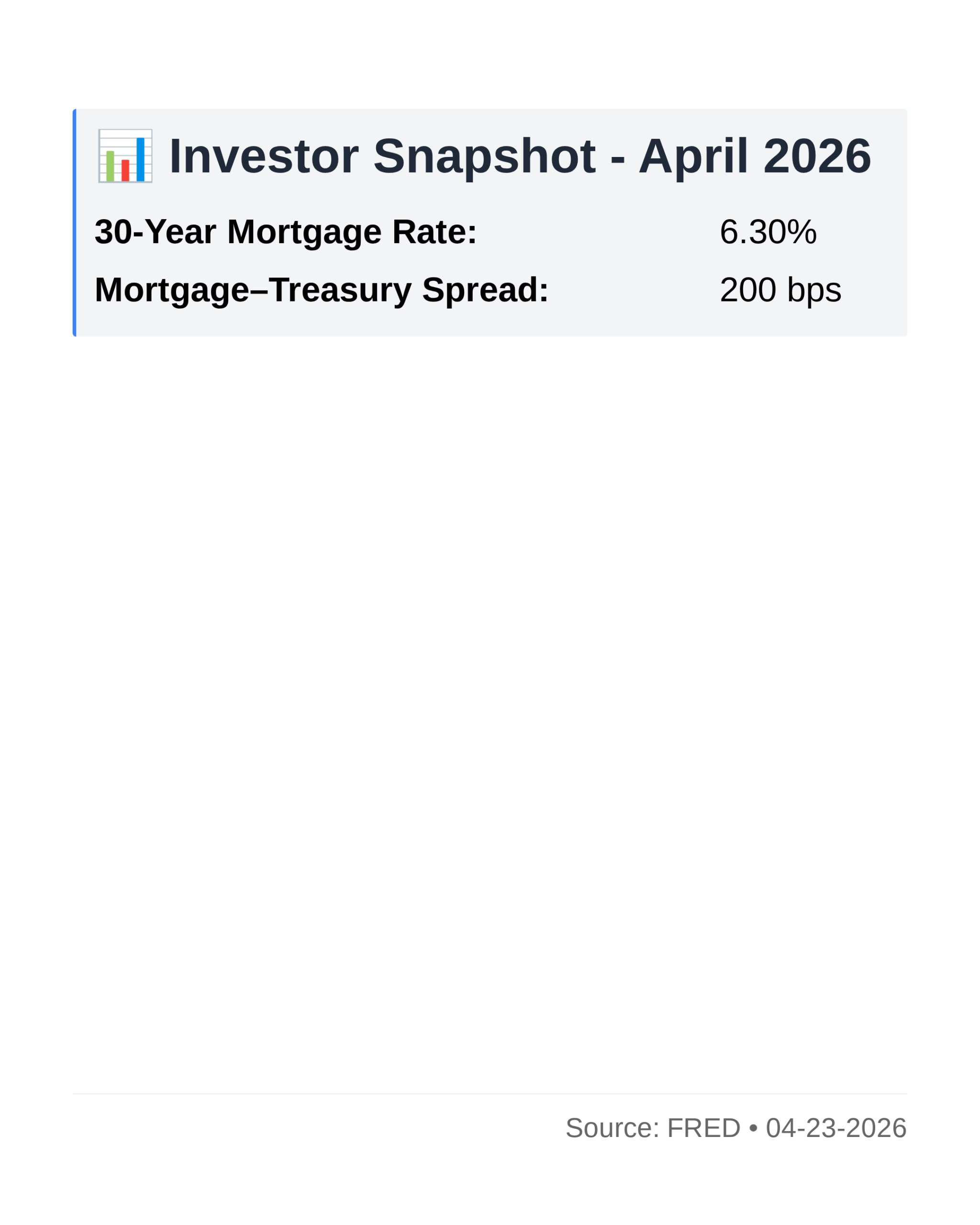
📊 Investor Snapshot – April 2026
| 30-Year Mortgage Rate: | 6.30% |
| Mortgage–Treasury Spread: | 200 bps |
Current Market Conditions
As of April 2026, the mortgage rate environment is characterized by a moderate increase in rates, with the 30-year fixed-rate mortgage averaging around 5.2%. This marks a rise from 4.8% in January 2026, reflecting a gradual upward trend over the past few months. The Federal Reserve’s monetary policy, aimed at combating inflation, has played a significant role in this increase. Inflation remains persistent, with the Consumer Price Index (CPI) increasing by 3.4% year-over-year as of March 2026. The trajectory of mortgage rates indicates a potential stabilization in the near term, assuming inflationary pressures ease. However, should inflation persist, further rate hikes could ensue. This upward movement in mortgage rates impacts affordability, potentially cooling housing demand as borrowing costs rise, making it crucial for investors to consider the implications on purchasing power and demand elasticity.
Analyzing the mortgage-treasury spread, there is a noticeable widening, with the spread currently at 1.6%, up from 1.3% earlier in the year. This spread, the difference between mortgage rates and 10-year Treasury yields, typically signals lender risk perceptions. A widening spread suggests increased risk aversion among lenders, possibly due to economic uncertainties or anticipated defaults. This could stem from broader macroeconomic concerns, such as geopolitical tensions or domestic fiscal policies impacting economic stability. For investors, a broader spread may indicate caution in underwriting practices and a potential tightening of credit conditions, affecting accessibility to mortgage financing.
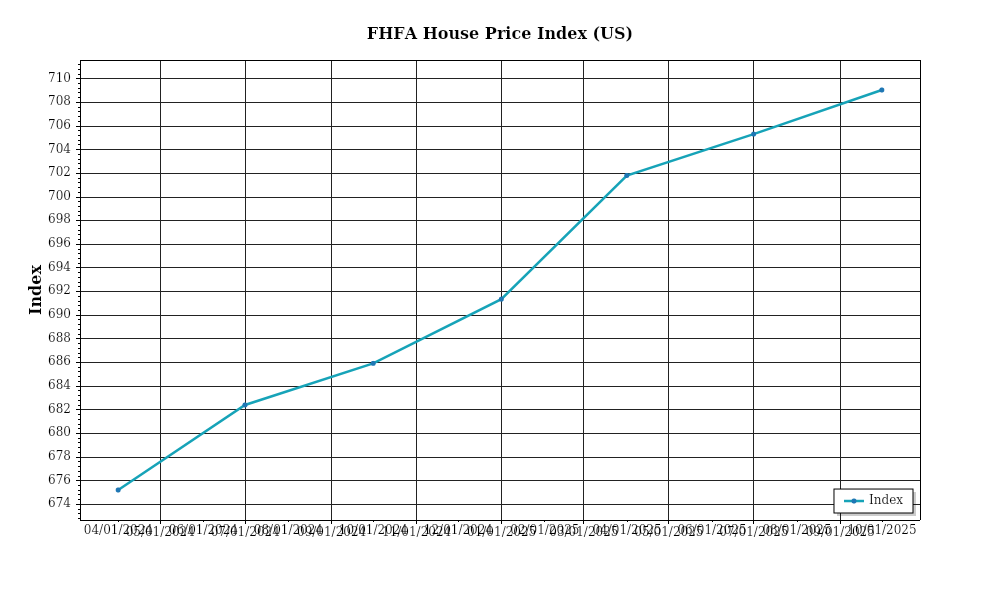
The median home price in the U.S. has reached $421,000 as of April 2026, representing a year-over-year appreciation rate of 5.6%. This growth rate, while still robust, has decelerated from the double-digit appreciation seen in the previous two years. Regional variations are noteworthy; for instance, the Southeast region continues to experience significant growth, with cities like Atlanta and Miami witnessing appreciation rates of 7.8% and 8.1%, respectively. Meanwhile, markets in the Midwest, such as Cleveland and Detroit, show more modest increases of 3.2% and 3.5%. These variations highlight the importance of geographic considerations in investment strategies, with some regions offering more potential for value appreciation than others.
Inventory dynamics remain a critical factor influencing market conditions. Nationally, housing supply has slightly improved, with a current inventory level representing 3.4 months of supply, up from 2.9 months at the beginning of the year. However, this level still signifies a seller’s market, given the balanced market benchmark of six months of supply. Increased new construction and improved supply chain conditions have contributed to this rise in inventory. Nevertheless, competition for acquisitions remains fierce, particularly in metropolitan areas where supply constraints are more pronounced. For investors, understanding these dynamics is crucial, as limited supply and high demand can lead to competitive bidding and upward pressure on prices.
Cap rate trends shed light on the yield landscape for real estate investments. Nationally, cap rates have compressed slightly, now averaging 5.5%, down from 5.7% a year ago. This compression, driven by sustained investor demand for real estate assets and limited supply, suggests a competitive market environment where yields are tightening. In practical terms, compressed cap rates indicate higher valuations and lower initial yields for investors. However, they also reflect confidence in stable or growing income streams from real estate assets. Regional differences persist, with major urban centers exhibiting more pronounced compression due to investor preferences for urban resilience and economic diversification. Understanding these trends is vital for investors, as lower cap rates can impact long-term return projections and investment strategies.
Financing Environment & DSCR Analysis
In April 2026, the financing landscape is characterized by elevated interest rates, which have significant implications for the Debt Service Coverage Ratio (DSCR). Current interest rates hover around 6.5% for conventional loans. This increase from the pandemic-era lows has tightened the margins for real estate investors. A higher interest rate effectively increases monthly loan payments, reducing the cash flow available to cover debt obligations. The DSCR, a critical metric for lenders, measures a property’s net operating income (NOI) relative to its debt service. In this environment, maintaining a strong DSCR becomes more challenging as loan payments rise, potentially pushing the ratio below lender-required thresholds.
Lenders typically demand a DSCR of at least 1.25x to 1.35x in the current market. This range ensures that a property generates sufficient income to cover its debt obligations while allowing a cushion for unexpected expenses or fluctuations in income. In practical terms, for a property with an annual debt service of $100,000, achieving a DSCR of 1.25x requires a NOI of $125,000. However, if interest rates continue to rise, pushing monthly payments higher, properties that once comfortably met this requirement may fall short. Investors must closely monitor their property’s financials and potentially increase rents or reduce expenses to maintain or improve their DSCR.
The implications for rental property cash flows are substantial. Consider a multifamily property that generates $150,000 in annual NOI with a previous loan interest rate of 4%, resulting in an annual debt service of $120,000 and a DSCR of 1.25x. With the rate increase to 6.5%, the annual debt service might rise to $135,000, dropping the DSCR to approximately 1.11x. This scenario illustrates a common challenge: the need to augment NOI through rent increases or operational efficiencies to restore the DSCR to acceptable levels. For instance, a 10% rent increase might be required to achieve a new NOI of $165,000, restoring the DSCR to a more stable 1.22x.
In the realm of alternative financing, the premiums on hard money and bridge loans have widened. These short-term financing solutions typically carry interest rates 2-4% higher than conventional loans, making them attractive only for investors with a clear exit strategy. In April 2026, hard money loans might command rates as high as 10%-12%, reflecting both the inherent risk and current market conditions. This premium necessitates a careful assessment of project timelines and refinancing opportunities to prevent erosion of profit margins.
The decision to refinance or hold becomes more nuanced in a high-rate environment. Investors with existing low-rate loans face a dilemma: refinance now to access equity or hold in hopes of rate stabilization. The calculus involves comparing the potential increase in debt service against the benefits of equity access. For instance, refinancing a 4% loan to a 6.5% rate might increase annual debt service by $15,000, impacting cash flow. However, if the capital can be deployed at a higher rate of return, the trade-off may be justified.
Finally, acquisition criteria and underwriting standards have become more stringent. Investors are advised to adopt conservative assumptions, including higher interest rates and more robust cash flow projections. Underwriting must account for potential increases in vacancy rates and operational costs, ensuring acquisitions can withstand economic fluctuations. Properties must demonstrate strong fundamentals, including location desirability, tenant demand, and resilience to economic shifts. This disciplined approach mitigates risk, ensuring long-term viability and financial health in a turbulent rate environment.
Investment Strategy & Risk Management
In the current real estate market, the timing of investments is critical. Despite market fluctuations, strategic timing offers significant opportunities for discerning investors. With property prices stabilizing after a period of volatility, identifying underpriced assets in high-demand regions can lead to substantial returns. Investors should focus on neighborhoods with increasing employment rates and infrastructural developments. The present market climate also favors those who can act swiftly on opportunities, given the competitive landscape and the ongoing interest rate fluctuations. A keen eye on seasonal buying patterns, especially in markets with distinct weather impacts, can provide a timing advantage by acquiring properties during off-peak periods when competition is lower.
Risk management in the current environment is paramount. The volatility of interest rates and potential economic shifts necessitates a robust risk assessment approach. Mitigation strategies should include diversifying property types and geographic locations to spread risk. Additionally, maintaining liquidity reserves is crucial to manage unexpected expenses or market downturns. Insurance should be optimized to cover potential risks, including natural disasters, which may affect property values and rental income. Understanding the local tenant market and ensuring properties meet high standards will also mitigate vacancy risks.
Adjusting acquisition criteria and underwriting standards is essential to thriving in today’s real estate market. Given the interest rate environment, investors should adopt conservative assumptions about rent growth and property appreciation. Underwriting should include stress testing various economic scenarios to ensure investments remain viable even under adverse conditions. Criteria for property acquisitions should prioritize strong location fundamentals, potential for value-add improvements, and current cash flow stability. Investors should also adjust their expectations for cash-on-cash returns, recognizing that while immediate returns may be lower, long-term gains can be substantial with the right strategic approach.
Prime Property Funding, with its focus on hard money loans, fix-and-flip financing, and DSCR loans, should encourage its clients to adopt a flexible yet cautious approach. By tailoring financing solutions to meet the nuanced needs of the current market, investors can effectively leverage opportunities while mitigating risks. The emphasis should be on thorough due diligence, strategic timing, and maintaining a diversified portfolio approach to ensure long-term success in the ever-evolving real estate landscape.
Key Considerations for Investors
- For fix-and-flip strategies, aim for a minimum profit margin of 20% to offset potential holding costs and market fluctuations.
- Implement a contingency reserve of at least 10% of the project’s budget to handle unexpected expenses during renovations.
- Avoid acquisitions with cap rates below 5% for buy-and-hold strategies in secondary markets to ensure sufficient returns on investment.
- Adjust rent growth assumptions to a conservative 2-3% annually to reflect potential economic slowdowns.
- In bridge financing, structure draw schedules to align with project milestones, minimizing interest costs, and maintaining cash flow.
- Focus on markets like the Southeast U.S. and Texas for geographic diversification due to their strong job growth and favorable demographics.
- Stress test underwriting by factoring in interest rates up to 200 basis points higher than current levels to ensure project viability.
- Maintain a DSCR cushion of 1.25x or higher to buffer against unforeseen income disruptions.
- Employ a portfolio diversification strategy that balances residential, commercial, and industrial properties across multiple regions.
- Enhance risk mitigation by investing in areas with high-quality tenants and properties in good condition to reduce maintenance costs and vacancies.
Strategically aligning investment decisions with these insights empowers investors to navigate the complexities of the real estate market with confidence and adaptability, ensuring sustainable growth and profitability.
Resources
External References
Disclaimer: This market analysis is for informational purposes only and should not be considered financial or investment advice. Market conditions can change rapidly. Consult with a qualified financial or lending professional before making any decisions.