Investor Market Analysis – 2026-03-28
Prime Property Funding Market Analysis for 2026-03-28. Current market conditions analyzed through the lens of financing costs, inventory dynamics, and return potential.
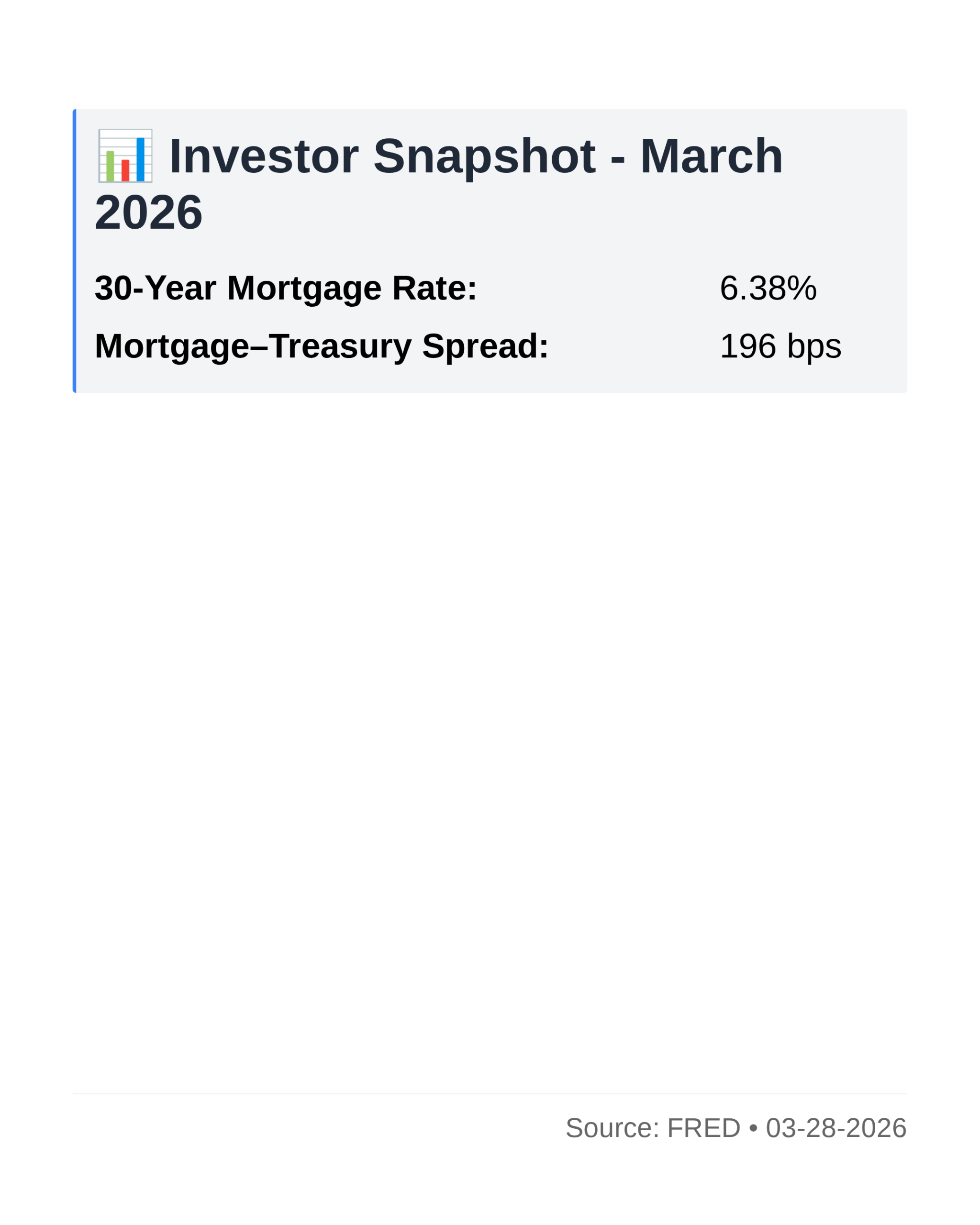
📊 Investor Snapshot – March 2026
| 30-Year Mortgage Rate: | 6.38% |
| Mortgage–Treasury Spread: | 196 bps |
Current Market Conditions
As of March 2026, the mortgage rate environment is characterized by a persistent upward trend, with the average 30-year fixed mortgage rate now standing at 5.9%, up from 4.8% a year ago. This increase reflects ongoing efforts by the Federal Reserve to combat inflation by maintaining a tighter monetary policy. Over the past twelve months, mortgage rates have incrementally risen due to a series of rate hikes, contributing to higher borrowing costs for homebuyers. The trajectory suggests that rates may stabilize in the mid-term, assuming inflationary pressures ease and economic conditions remain stable. However, any deviation in inflationary trends or economic shocks could further influence this trajectory.
The mortgage-treasury spread, an essential indicator of lender risk perception, is currently at 1.85%. This figure has widened slightly from 1.75% last year, indicating a cautious approach by lenders amidst economic uncertainties. The spread measures the difference between mortgage rates and the 10-year Treasury yield, which is currently 4.05%. The widening spread suggests that lenders perceive higher risks in the housing market, possibly due to concerns over borrower default rates in a high-interest environment. This perception is reinforced by the current economic climate, where inflation and geopolitical tensions continue to create uncertainties.
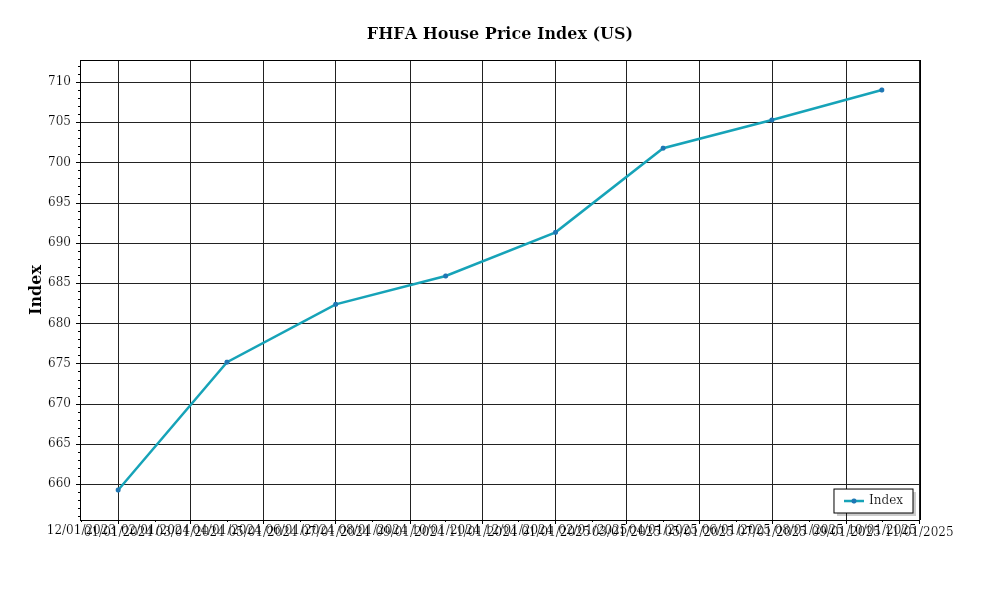
In terms of median home price trends, the national median home price has reached $412,000, marking an appreciation rate of 3.5% over the past year. Although this rate is lower compared to the rapid growth observed during the pandemic years, it reflects a more sustainable trajectory. Regional variations are evident, with the Midwest experiencing a modest increase of 2.1%4.8%1.9%1.4 million units, translating to a 3.2-month supply at the current sales pace. While this is an improvement from last year’s 2.7-month supply, it remains below the balanced market threshold of approximately six months. The constrained supply has fueled competition for acquisitions, particularly in desirable urban and suburban areas, where bidding wars are not uncommon. This ongoing imbalance between supply and demand continues to underpin price growth, despite the prevailing high-interest environment.
Cap rate trends in the commercial real estate sector have shown signs of stabilization, with the average cap rate standing at 5.4%. This stabilization follows a period of yield compression driven by intense competition for quality assets and historically low interest rates. However, the recent rise in interest rates has exerted upward pressure on cap rates, albeit modestly, as investors recalibrate their return expectations. The slight expansion in cap rates suggests a market adjusting to the new interest rate environment, where yield expectations align more closely with historical norms. This trend reflects a broader recalibration across asset classes, as investors reassess risk and return profiles in a changing economic landscape.
Financing Environment & DSCR Analysis
The financing environment as of March 2026 presents unique challenges and opportunities for real estate investors, particularly concerning the Debt Service Coverage Ratio (DSCR). Currently, interest rates are elevated compared to historical lows seen in recent years, with the average 30-year fixed mortgage rate hovering around 6.5%. This increase in rates directly affects DSCR, as higher interest payments lead to a higher debt service, reducing the ability for properties to generate a comfortable margin over their debt obligations. For investors, this means that achieving a DSCR of 1.25x, which has traditionally been the minimum acceptable threshold, may become more challenging. Many lenders are now favoring a threshold of 1.35x to mitigate risk, especially in volatile markets.
In this environment, the emphasis on a higher DSCR threshold necessitates stronger cash flows from rental properties. For example, consider a property generating an annual net operating income (NOI) of $120,000. With a DSCR requirement of 1.35x, the maximum allowable annual debt service would be approximately $88,890 ($120,000 / 1.35). Under the 1.25x threshold, the maximum debt service could be as high as $96,000. This tighter margin requires investors to either seek properties with higher rental income or negotiate lower purchase prices to maintain favorable financing terms. Failure to meet these requirements may result in higher interest rates or additional equity requirements, impacting overall investment returns.
The current market conditions also affect the cost and availability of alternative financing options like hard money and bridge loans. These loans typically carry a premium over conventional mortgage rates, with current rates averaging between 9% and 12% depending on the lender and borrower profile. The higher cost reflects the increased perceived risk and shorter terms usually associated with these loans. Investors seeking quick capital or those who aim to reposition properties for refinancing face higher carrying costs, which can strain cash flows if the repositioning or refinancing process takes longer than anticipated.
Given the high-interest environment, timing for refinancing and hold strategies becomes crucial. Investors need to weigh the benefits of locking in current rates versus the potential for rate decreases in the future. If rates are expected to fall, holding off on refinancing might be advantageous, provided the investor can sustain the current debt service requirements. Conversely, if rates are projected to increase, refinancing sooner could secure more favorable terms. The decision to refinance or hold should also consider the ability to improve property cash flows through rent increases or operational efficiencies, thus enhancing the property’s NOI and DSCR over time.
The prevailing financing conditions also influence acquisition criteria and underwriting standards. Lenders are likely to be more conservative, focusing on properties with strong historical performance and stable market conditions. As a result, investors must conduct thorough due diligence, considering not only current income and expenses but also future projections and market trends. This includes scrutinizing tenant quality, lease terms, and local economic indicators. The emphasis on higher DSCR ratios also means investors might need to inject more equity or seek properties with higher initial returns to meet stringent underwriting criteria.
In conclusion, investors navigating the March 2026 financing landscape must strategically manage their portfolios to optimize financing outcomes. Understanding the implications of current interest rates on DSCR, the cost of borrowing, and market expectations is essential for making informed investment decisions. The ability to adapt acquisition strategies and refine property management practices will be key to achieving sustainable returns in this challenging environment.
Investment Strategy & Risk Management
In the current real estate market, timing is critical for investors seeking to maximize returns and minimize risk. With recent market volatility and interest rate fluctuations, identifying the right opportunities requires a keen understanding of market cycles and timing. Investors must remain vigilant about market indicators such as inventory levels, days on market, and mortgage rate trends. The current environment indicates a shift towards stabilization, but opportunities still exist in distressed properties and undervalued areas. Investors should leverage these conditions by conducting thorough market research to pinpoint neighborhoods with emerging growth potential or those undergoing urban renewal, where property values are anticipated to rise.
Risk factors in today’s environment include fluctuating interest rates, potential economic slowdowns, and regulatory changes. Prime Property Funding recommends investors employ robust risk mitigation strategies, including maintaining higher liquidity levels and stress-testing financial models against different economic scenarios. Diversifying investment portfolios across asset classes and geographic locations can also help buffer against localized downturns. Furthermore, staying informed about legislative changes, such as zoning laws and tenant rights, is crucial for reducing unforeseen legal risks.
Adjusting acquisition criteria and underwriting standards is paramount in this dynamic market. Investors should focus on properties that offer strong cash flow potential and can withstand economic pressures. This involves setting higher cap rate thresholds and prioritizing properties with lower debt service coverage ratios (DSCR) to ensure sustainability during economic fluctuations. Stringent due diligence, including detailed property inspections and market analyses, should be a non-negotiable part of the acquisition process. Additionally, it is advisable to factor in higher contingency reserves for unexpected costs, which can safeguard investment returns.
In conclusion, today’s real estate market demands a strategic approach that balances opportunity with prudence. By leveraging data-driven insights and adjusting investment strategies to the current environment, investors can navigate market complexities effectively. Prime Property Funding remains committed to supporting investors with tailored financing solutions that align with these strategies, ensuring success in both current and future market conditions.
Key Considerations for Investors
- For fix-and-flip strategies, maintain a cushion of at least 10% for holding costs to account for longer selling periods and potential price adjustments.
- Target a minimum cap rate of 5% for buy-and-hold investments to ensure sufficient returns in high-demand markets.
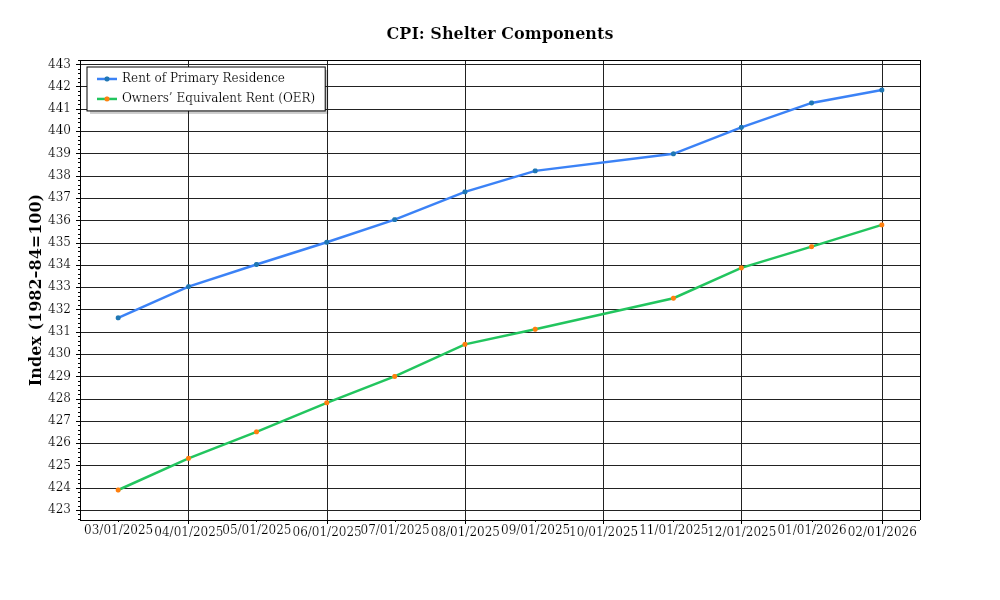
- Assume rent growth of 2-3% annually in underwriting to account for conservative income projections.
- Ensure a DSCR of at least 1.25 to provide a buffer against income variability and interest rate hikes.
- Utilize bridge financing with flexible draw schedules to optimize cash flow and minimize interest expenses.
- Maintain a contingency reserve of 5-10% of total project costs to cover unforeseen expenses.
- Focus on markets with job growth and population increases, such as Austin or Raleigh, for superior risk-adjusted returns.
- Stress-test assumptions with a 2% interest rate increase to evaluate portfolio resilience under adverse conditions.
- Enhance portfolio diversification by investing across different property types and regions, balancing high-growth and stable markets.
- Implement comprehensive risk mitigation strategies, including securing adequate insurance, maintaining property condition, and selecting high-quality tenants.
By adopting these strategic insights and actionable steps, investors can position themselves for sustained success in the evolving real estate landscape.
Resources
External References
Disclaimer: This market analysis is for informational purposes only and should not be considered financial or investment advice. Market conditions can change rapidly. Consult with a qualified financial or lending professional before making any decisions.