Investor Market Analysis – 2026-06-15
Prime Property Funding Market Analysis for 2026-06-15. Current market conditions analyzed through the lens of financing costs, inventory dynamics, and return potential.
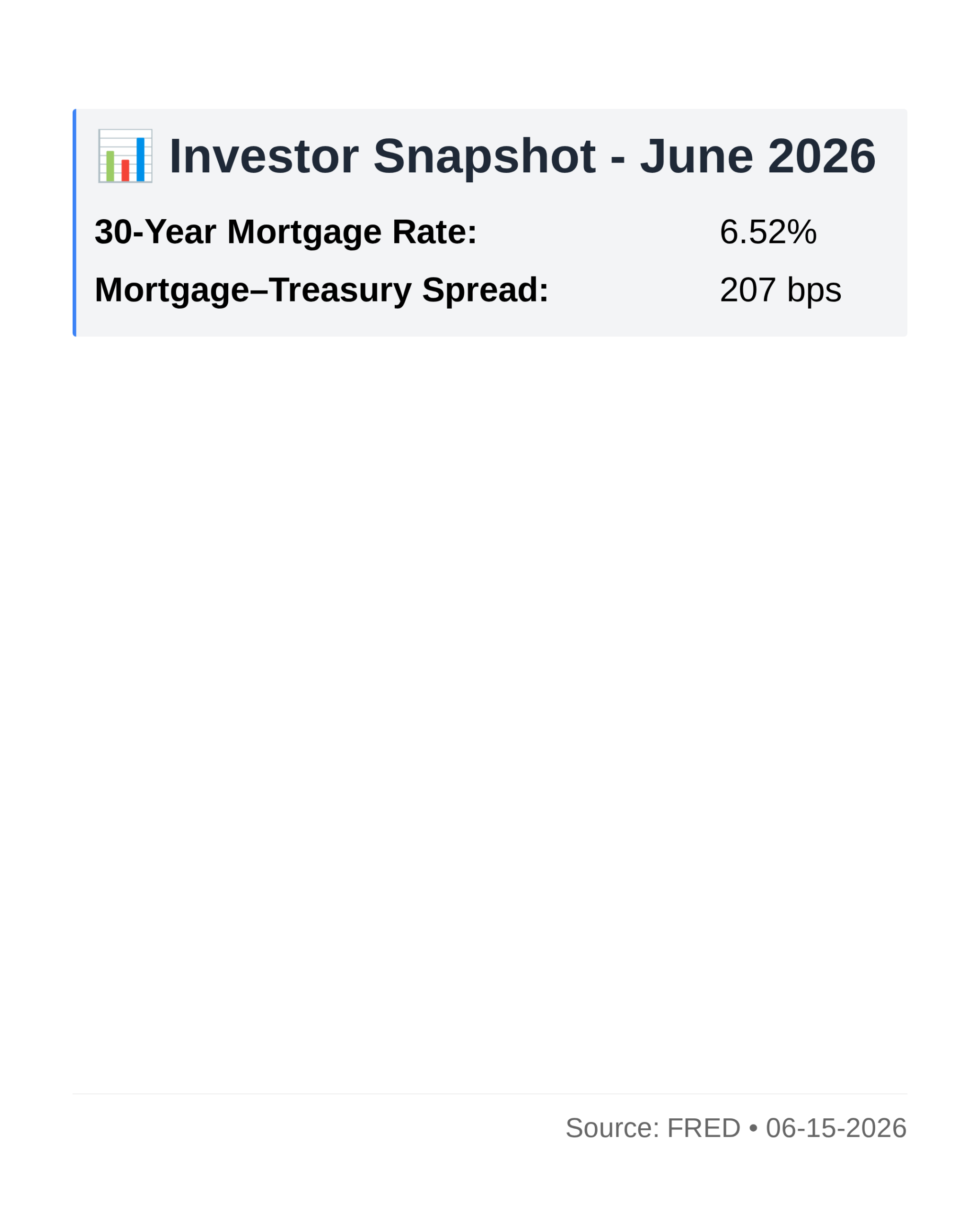
📊 Investor Snapshot – June 2026
| 30-Year Mortgage Rate: | 6.52% |
| Mortgage–Treasury Spread: | 207 bps |
Current Market Conditions
The U.S. real estate market in June 2026 is characterized by a complex interplay of mortgage rates, home price trends, and inventory dynamics, each influenced by broader economic conditions. The current mortgage rate environment shows that the 30-year fixed mortgage rates are hovering around 5.75%, having increased from 5.25% at the start of the year. This 50 basis point increase reflects ongoing inflationary pressures, prompting the Federal Reserve to maintain a tighter monetary policy. The trajectory suggests a stabilization in rates as inflation shows signs of moderation, but potential volatility remains due to geopolitical uncertainties and domestic fiscal policies.
The mortgage-treasury spread, which measures the difference between 30-year fixed mortgage rates and the 10-year Treasury yield, is currently at 180 basis points. This spread is slightly above the historical average of 170 basis points, indicating an elevated risk perception among lenders. The wider spread suggests that lenders are factoring in higher default risks and economic uncertainty into mortgage pricing. This perception is driven by fluctuating economic indicators, such as employment rates and consumer confidence levels, which have shown mixed signals in recent months. The spread’s trajectory will be crucial in determining lenders’ confidence and could either narrow, signaling reduced risk, or widen further, indicating heightened caution.
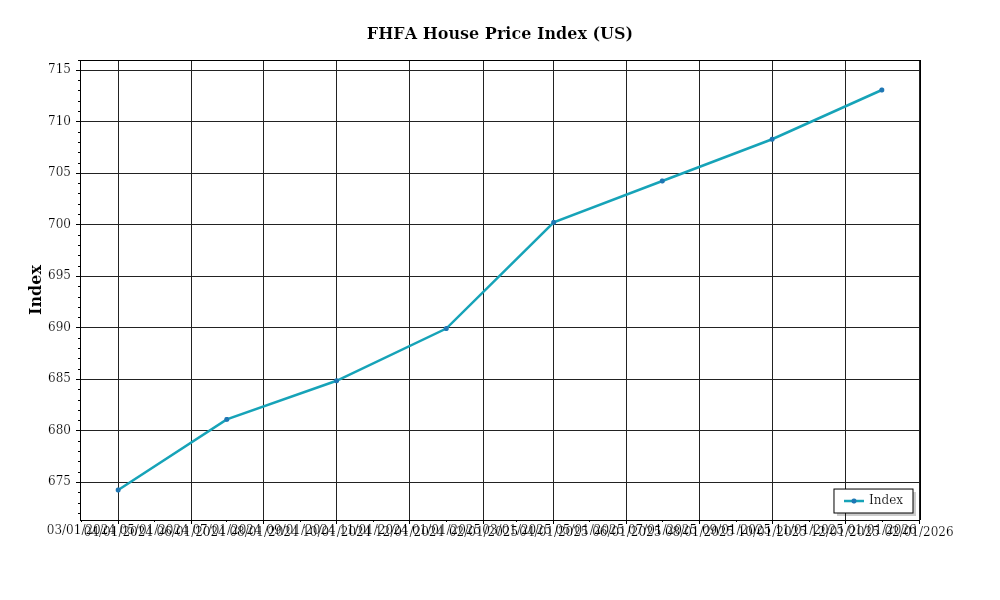
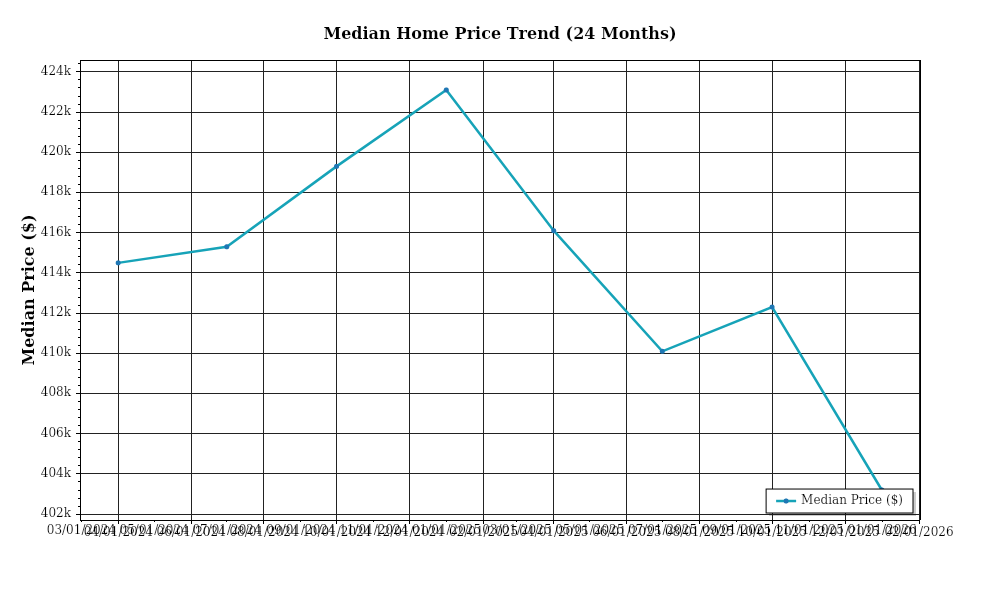
Median home prices have continued their upward trend, with the national median price reaching $435,000 in June 2026. This represents a 4.3% increase from June 2025, although the annual appreciation rate has slowed compared to the 6.5% increase observed the previous year. Regional variations are notable, with the Western U.S. experiencing the highest median price growth at 6.2%, driven by strong demand in tech hubs like San Francisco and Seattle. In contrast, the Midwest sees a more modest increase of 2.8%, reflective of its slower economic recovery and less pronounced demand pressures. These trends suggest a market adjusting to more sustainable appreciation rates following the rapid increases of the post-pandemic surge.
Inventory dynamics continue to be a critical factor, with current supply levels at approximately 3.2 months of inventory, slightly below the balanced market benchmark of 4 to 6 months. This tight inventory is fueling competitive bidding, particularly in urban and suburban markets where demand remains robust. The lack of new construction, hindered by labor shortages and high material costs, exacerbates the supply crunch. However, a slight increase in listings over the past quarter indicates potential easing in certain markets, although this is not yet enough to shift the overall balance significantly. The inventory situation suggests that buyers are still facing significant competition, although the pace of bidding wars has slowed compared to the frenetic conditions of 2025.
Cap rate trends reveal both compression and expansion, depending on the market segment. Nationally, the average cap rate for multifamily properties has compressed to 5.0%, down from 5.3% last year, highlighting continued strong investor demand and confidence in rental income stability. Conversely, retail properties are seeing cap rate expansion, with current rates averaging 6.8%, up from 6.5%, reflecting investor caution in the face of evolving consumer habits and e-commerce growth. The office sector remains mixed, with cap rates stabilizing at 6.0%, as investors weigh the impact of hybrid work models on long-term demand. These cap rate movements underscore the varying levels of investor confidence and risk across different property types, with multifamily assets continuing to attract strong interest due to their perceived stability and growth potential.
Financing Environment & DSCR Analysis
As of June 2026, the financing environment is characterized by moderately high interest rates, which have a significant impact on Debt Service Coverage Ratios (DSCR). Interest rates have settled at an average of 5.5% for conventional loans, following a period of economic adjustments. This rate environment directly affects the calculation of DSCR, a critical measure for lenders evaluating the ability of an income-generating property to cover its debt obligations. The DSCR is calculated by dividing the Net Operating Income (NOI) by the annual debt service. Higher interest rates increase debt service costs, thereby reducing DSCR values if NOI remains constant. For instance, if a property generates an NOI of $150,000 and faces an annual debt service of $120,000, the DSCR is 1.25x. However, should interest rates push annual debt service to $135,000, the DSCR drops to 1.11x, potentially falling below lender thresholds.
In this environment, typical DSCR requirements are stringent, commonly set at a minimum of 1.25x to 1.35x. Lenders are cautious, often demanding the higher end of the range, particularly for properties with more volatile income streams. A DSCR of 1.35x ensures a buffer against unexpected expenses or income fluctuations, offering lenders greater security. For properties barely meeting the 1.25x threshold, refinancing under current conditions might be difficult without significant NOI growth or renegotiation of loan terms. As a result, property owners must focus on maintaining or increasing NOI through strategic tenant acquisition or operational efficiencies to meet these DSCR requirements.
Cash flow implications for rental properties are substantial in this rate environment. Property owners need to calculate their potential cash flows more conservatively. For example, a multifamily property with 20 units, each renting at $1,500 per month, generates a gross rental income of $360,000 annually. Assuming operating expenses of $120,000, the NOI stands at $240,000. With a required DSCR of 1.35x, the maximum feasible annual debt service is approximately $177,778. This necessitates careful structuring of loan terms to avoid exceeding this limit. Property owners may need to explore avenues such as rent increases, additional revenue streams, or cost reductions to enhance cash flow and sustain the desired DSCR.
The current market also sees elevated premiums on hard money and bridge loans, with rates ranging between 8.5% and 10.5%. These short-term financing solutions, while offering flexibility, demand higher DSCRs due to their increased risk profile and cost. Investors utilizing these loans must ensure rapid value addition to properties to refinance into more favorable conventional loan terms swiftly. This scenario highlights the importance of a well-timed refinance strategy, balanced against holding strategies. Delaying refinancing until interest rates potentially decline might preserve cash flow, but risks locking in higher costs if rates remain elevated or increase further.
The impact on acquisition criteria and underwriting standards is profound. Buyers and lenders are recalibrating expectations, with a focus on properties that can sustain or enhance NOI to accommodate higher debt service costs. Underwriting standards now emphasize detailed cash flow projections, stress tests for DSCR under various interest rate scenarios, and a robust analysis of market conditions. Properties in stable markets with strong demand fundamentals are preferred, as they offer a more predictable income stream and the potential for NOI growth. As such, investors must align their acquisition strategies with these rigorous standards to secure financing and ensure long-term property performance in a challenging interest rate environment.
Investment Strategy & Risk Management
In the current real estate climate of June 2026, market timing and opportunity identification have become critical for investors seeking to maximize returns. With the Federal Reserve’s recent rate stabilization, fixed-rate financing opportunities have become more predictable, allowing investors to better forecast cash flows. However, identifying the right moments to enter or exit the market remains crucial. Investors should seek properties in transitional neighborhoods where value appreciation is likely, focusing on leveraging data analytics and market trends to pinpoint high-growth areas. Seasonal trends also play a role, with many markets experiencing increased activity during spring and fall. Timing acquisitions to align with these patterns can optimize purchase prices and streamline rehabilitation or leasing processes.
Risk factors are ever-present in the current environment, particularly inflationary pressures and potential shifts in regulatory policies affecting property taxes and landlord-tenant laws. Mitigation strategies should include building in higher contingency reserves to cover unexpected costs and ensuring fixed-cost loans where possible to shield against rate fluctuations. Additionally, investors should diversify their portfolios to include a mix of property types and geographical locations, thus spreading risk and taking advantage of varying market dynamics. By enhancing due diligence processes and focusing on properties with strong fundamentals, investors can better navigate market volatility.
Adjusting acquisition criteria and underwriting standards is essential to align with current market conditions. Given the competitive landscape, it is prudent to adopt conservative underwriting practices, including stress-testing financial models against potential interest rate hikes and rental income fluctuations. Investors should prioritize properties that meet or exceed a minimum debt service coverage ratio (DSCR) of 1.25 and target cap rates that are reflective of both risk and growth potential in the specific market. This cautious approach ensures that investments remain viable even under adverse economic conditions.
For Prime Property Funding, focusing on strategic partnerships and innovative financing solutions can provide a competitive edge in this dynamic environment. Offering flexible terms on fix-and-flip and DSCR loans can attract seasoned investors looking to capitalize on market opportunities. By maintaining rigorous credit assessments and leveraging technology for efficient underwriting, Prime Property Funding can mitigate risk while empowering investors to achieve their financial goals.
Key Considerations for Investors
- Focus on fix-and-flip strategies with an emphasis on reducing holding costs by targeting properties with clear, quick renovation timelines and reliable contractor relationships.
- Set spread risk thresholds at 15% above the purchase price to ensure adequate profit margins after renovations and sales costs.
- Implement exit timing strategies by pre-listing properties and engaging realtors early to minimize market exposure post-renovation.
- In buy-and-hold investments, target a cap rate of at least 5.5% to ensure competitive returns and incorporate a DSCR cushion of 1.3 to safeguard against income variability.
- Adjust rent growth assumptions conservatively, projecting annual increases of 2-3% to account for potential economic slowdowns.
- Leverage bridge financing with a clear exit strategy, ensuring draw schedules align with project milestones to manage cash flow effectively.
- Prioritize markets in the Southeast and Midwest for their risk-adjusted returns and growth potential, given their economic resilience and population influx.
- Conduct stress testing under conservative scenarios, including rental income declines of up to 10% and interest rate increases of 1-2%.
- Enhance portfolio diversification by balancing residential and commercial holdings across at least three distinct geographic markets.
- Mitigate risk by maintaining reserves equivalent to 6 months of operating expenses and securing comprehensive insurance policies to protect against unforeseen events.
By adopting these strategies and remaining vigilant, investors can successfully navigate the complexities of the current market, seizing opportunities while managing risks effectively.
Resources
External References
Disclaimer: This market analysis is for informational purposes only and should not be considered financial or investment advice. Market conditions can change rapidly. Consult with a qualified financial or lending professional before making any decisions.