Investor Market Analysis – 2026-05-20
Prime Property Funding Market Analysis for 2026-05-20. Current market conditions analyzed through the lens of financing costs, inventory dynamics, and return potential.
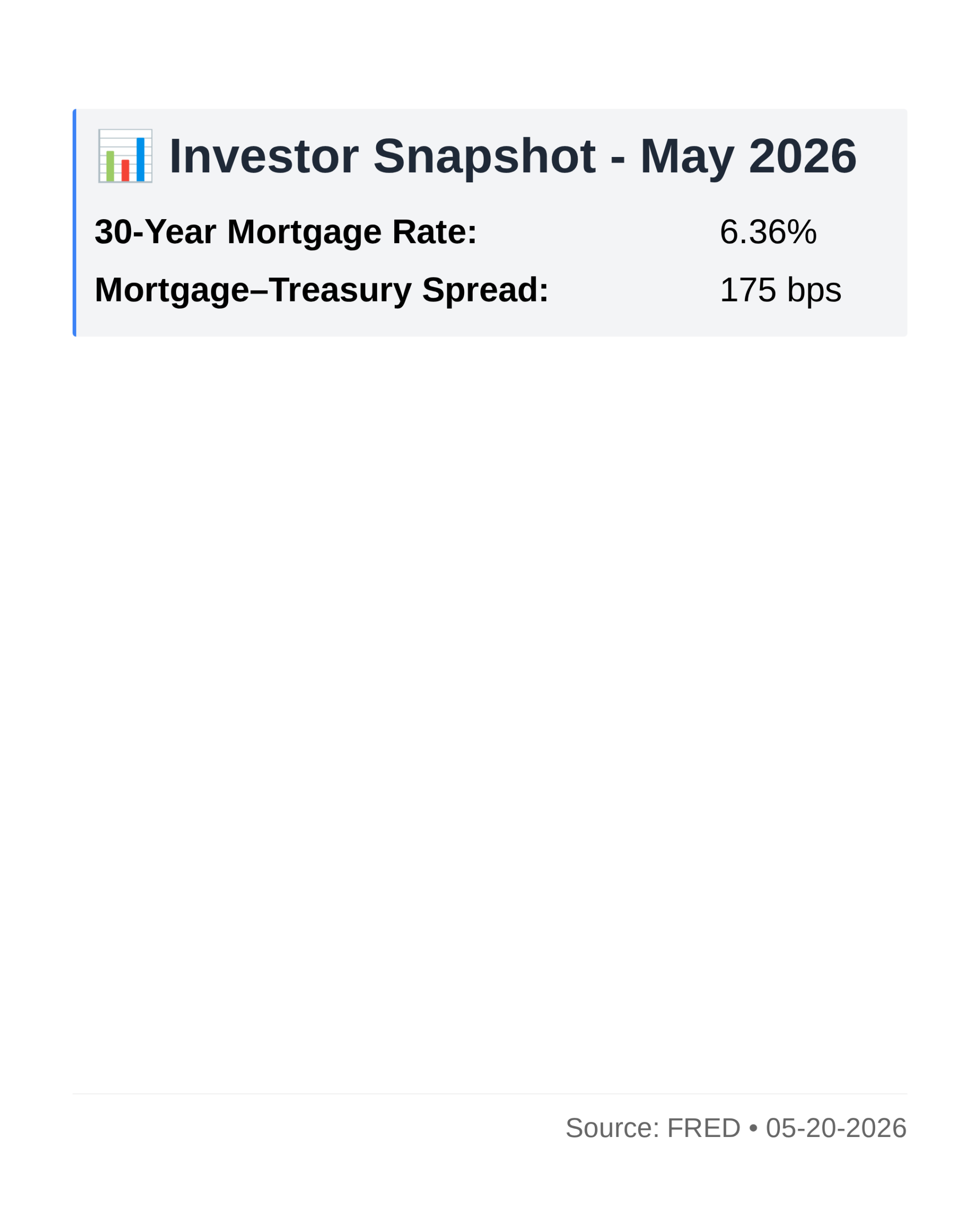
📊 Investor Snapshot – May 2026
| 30-Year Mortgage Rate: | 6.36% |
| Mortgage–Treasury Spread: | 175 bps |
Current Market Conditions
As of May 2026, the mortgage rate environment remains a pivotal factor influencing the housing market. Currently, the average 30-year fixed mortgage rate stands at 5.1%, a moderate increase from 4.7% recorded in May 2025. This upward trend is primarily attributed to the Federal Reserve’s incremental rate hikes intended to curb inflation, which have cumulatively added 75 basis points over the past 12 months. Despite the increases, mortgage rates remain historically low, encouraging continued borrowing even as the cost of financing climbs. The trajectory suggests a gradual incline, with expectations of a further 0.2% increase by the end of 2026, reflecting the Fed’s ongoing monetary policy adjustments. Consequently, potential buyers are urged to lock in rates sooner to avoid higher future costs, while current homeowners are evaluating refinancing strategies to optimize their financial positions.
The mortgage-treasury spread, an indicator of lender risk perception, currently hovers around 1.8%, slightly above the historical average of 1.5%. This wider spread suggests increased caution among lenders, likely due to economic uncertainties and potential borrower defaults. Over the past year, this spread has varied between 1.6% and 1.9%, indicating fluctuating confidence levels within the financial sector. The persistence of a higher spread signals a cautious lending environment, where lenders are more discerning about borrower qualifications and loan conditions. Investors should interpret this as a sign that while credit is still accessible, the cost of borrowing may reflect additional risk premiums, influencing the overall cost structure of real estate investments.
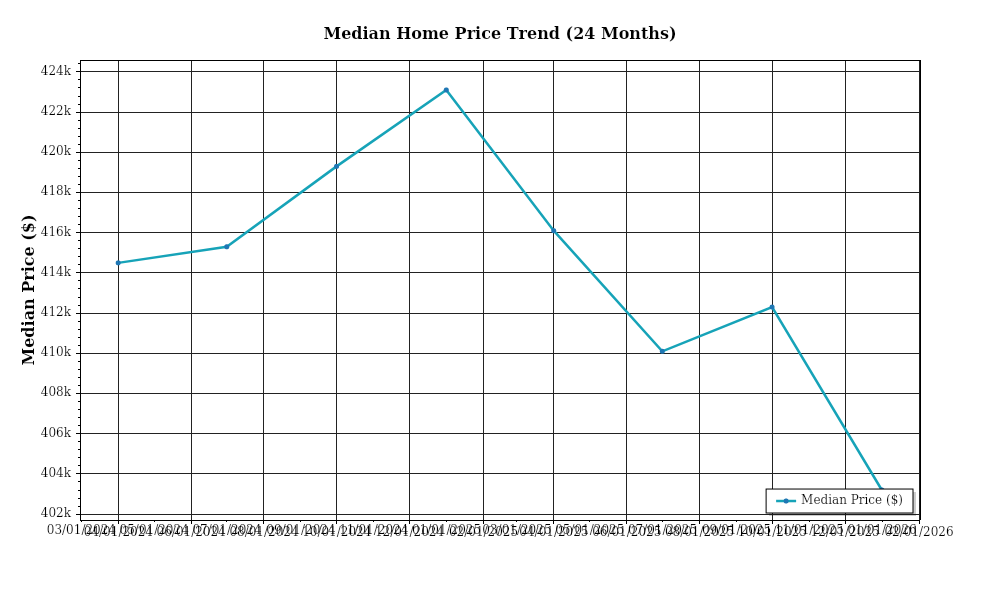
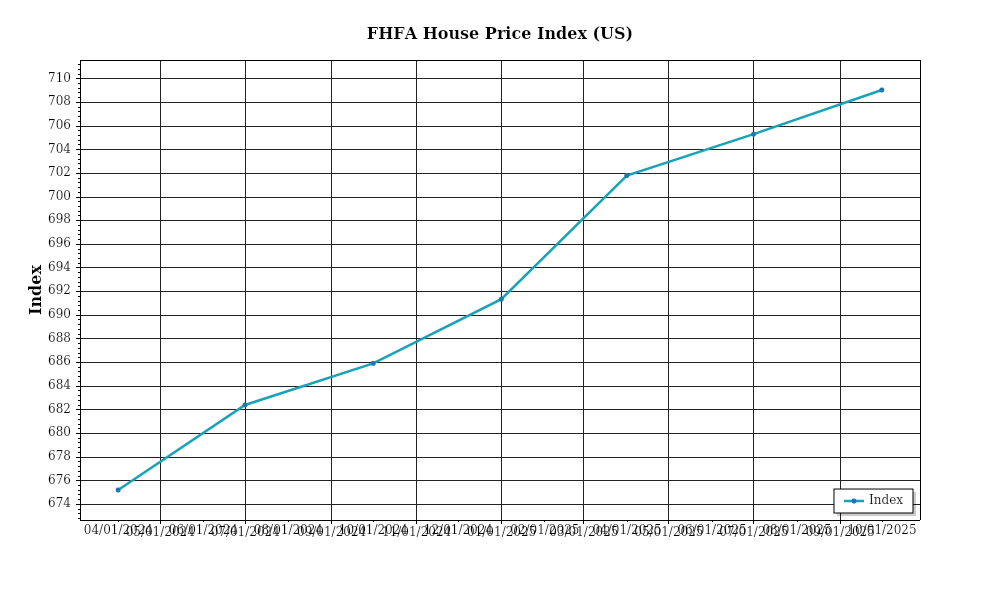
Median home price trends reveal a continued pattern of appreciation, with the national median home price reaching $425,000 in May 2026, an increase of 8.4% year-over-year. This rate of appreciation, although robust, shows a slight deceleration compared to the 10.2% increase observed from 2024 to 2025. Regionally, the West Coast and Northeast continue to lead in price growth, with median prices increasing by 10.5% and 9.7%, respectively. In contrast, the Midwest and South exhibit more moderate growth, at 6.3% and 7.1%. The variations highlight differing regional dynamics, influenced by factors such as population growth, employment opportunities, and local economic conditions. These trends suggest continued opportunities for appreciation, particularly in high-demand urban areas, though potential buyers should prepare for competitive market conditions.
Inventory dynamics remain a critical aspect of the current market, with supply levels struggling to meet demand. As of May 2026, the national housing inventory represents a mere 2.5 months supply, a slight improvement from 2.2 months in May 2025 but still well below the balanced market threshold of 6 months. This persistent shortage is fueled by ongoing supply chain disruptions, labor shortages in construction, and regulatory constraints, particularly in high-demand areas. The tight inventory continues to drive competition, with multiple offers and bidding wars becoming the norm in many markets. Investors should be cognizant of this landscape, as the scarcity of available properties may necessitate more aggressive acquisition strategies or a focus on markets with less competition.
Cap rate trends are also indicative of the current market conditions, with an ongoing trend of yield compression observed across most property types. As of May 2026, the average cap rate for commercial properties is approximately 5.6%, down from 6.1% the previous year. This compression reflects increased property values and strong investor demand, even amidst rising interest rates, as real estate remains an attractive asset class. The continued compression of cap rates suggests that investors are willing to accept lower returns in exchange for perceived stability and long-term appreciation potential. However, this trend also implies tighter margins and the necessity for precise due diligence and strategic planning to ensure profitability.
Financing Environment & DSCR Analysis
The current interest rate environment, as of May 2026, significantly affects the Debt Service Coverage Ratios (DSCR) for real estate investors. With interest rates hovering around 5.5% for conventional loans, this high-rate environment places pressure on DSCR calculations, making it more challenging for investors to achieve favorable financing terms. This is particularly impactful because DSCR is the ratio of net operating income (NOI) to total debt service, and as interest rates rise, so do monthly debt obligations. For instance, an investor with a property generating $120,000 in annual NOI with debt service of $90,000 previously enjoyed a DSCR of 1.33x. However, with increased rates, if debt service rises to $100,000, the DSCR drops to 1.20x, falling below the typical minimum threshold and potentially jeopardizing financing options.
In this climate, lenders have adjusted their typical DSCR requirements. Where once a DSCR of 1.25x might have sufficed, many lenders now prefer a 1.35x threshold to buffer against risk in a volatile rate environment. This shift requires properties to demonstrate greater cash flow relative to their debt obligations, which can be challenging in markets where rental income growth has not kept pace with rising interest rates. For investors looking to finance new acquisitions, this means more stringent underwriting standards and possibly larger down payments to achieve the desired DSCR, which can strain liquidity and limit growth potential.
The cash flow implications for rental properties are significant under these conditions. Consider a multi-family property with an annual rental income of $150,000 and operating expenses totaling $50,000, leaving an NOI of $100,000. With a 5.5% interest rate on a $1 million loan, the annual debt service might be approximately $68,000, resulting in a DSCR of 1.47x. While this is still above the new acceptable threshold, any further increase in interest rates or unexpected expenses could push the DSCR below the 1.35x mark. This scenario underlines the importance of maintaining a cushion in income generation and expense management to safeguard against financing challenges.
Hard money and bridge loans, which are typically used for short-term financing solutions, carry even higher rate premiums in the current market. These loans often have interest rates in the range of 8% to 10%, reflecting the increased risk lenders associate with short-term and less secure financing. This premium significantly impacts cash flow, making it crucial for investors using these products to have a clearly defined exit strategy, whether through refinancing or property disposition, to avoid prolonged exposure to high rates that can erode profitability.
Given the current rate environment, the timing of refinance versus hold strategies becomes a strategic decision. If an investor anticipates that rates will stabilize or decrease in the near term, it might be advantageous to hold off on refinancing, despite the potential for higher immediate cash flow. Conversely, if an investor believes rates will continue to climb, refinancing sooner could lock in current rates and protect against future increases. This decision should be informed by a detailed analysis of property performance, market trends, and individual investment goals.
The impact on acquisition criteria and underwriting standards is profound. Lenders are increasingly scrutinizing properties’ cash flow potential and overall risk profile. This means that properties with stable, high-yielding income streams and strong market fundamentals are more likely to meet the stricter DSCR requirements. Investors must also consider additional factors such as location, tenant profiles, and market growth potential more thoroughly during the underwriting process to ensure compliance with evolving lender expectations. As a result, the acquisition of new properties may require more rigorous due diligence and potentially adjusting offer prices to reflect the increased cost of capital and tighter financing conditions.
Investment Strategy & Risk Management
In the current real estate market, timing and strategic opportunity identification are critical for maximizing returns and minimizing risks. Given the volatility of interest rates and the fluctuating demand across various property types, investors must be agile yet cautious in their acquisition strategies. The key to successful market timing lies in understanding cyclical trends and economic indicators that influence property values and rental yields. Investors should focus on identifying micro-markets with strong growth potential, driven by factors such as employment growth, infrastructure development, and demographic shifts. These elements can signal opportunities to acquire properties at a relative discount before broader market recognition drives up prices.
However, the prevailing economic environment is not without its risks. Inflationary pressures and potential interest rate hikes present significant challenges, impacting both financing costs and property values. Mitigation strategies must include thorough due diligence and stress testing of financial models. Investors should leverage flexible financing options, such as DSCR loans, which allow for adjustments in cash flow assumptions and provide a cushion against fluctuating rental incomes. Additionally, maintaining a strong cash reserve is imperative to manage unforeseen expenses and provide liquidity in case of market downturns.
Adjusting acquisition criteria and underwriting standards is essential in this climate. Investors should prioritize properties with strong cash flow potential and robust tenant demand. Emphasis should be placed on properties that can achieve a minimum cash-on-cash return of 8-10% annually, ensuring that investments are resilient to economic fluctuations. Underwriting should incorporate conservative rent growth assumptions, capped at 3-4% annually, to avoid overestimating income potential. Furthermore, investors must evaluate geographic markets with a focus on risk-adjusted returns, targeting areas that offer stable employment sectors and sustained population growth.
To capitalize on current opportunities while managing risks effectively, investors should adopt a diversified approach. Balancing asset classes, geographic locations, and investment strategies can mitigate exposure to sector-specific downturns. A focus on quality over quantity will ensure that portfolios remain resilient and capable of weathering economic storms. By implementing these strategies, investors can confidently navigate the complexities of the current real estate market, securing profitable and sustainable investments.
Key Considerations for Investors
- For fix-and-flip strategies, aim for a gross profit margin of at least 15-20% to accommodate potential overruns in holding costs and market shifts.
- Establish a predetermined exit timing strategy, targeting property sales within 6-9 months to minimize holding costs and capitalize on peak market conditions.
- In buy-and-hold tactics, aim for a cap rate of 6-8% and ensure that your DSCR is a minimum of 1.25 to provide a buffer against potential income disruptions.
- Incorporate a cash-on-cash return target of at least 8%, ensuring sufficient cash flow to cover debt obligations and operational expenses.
- For bridge financing, negotiate draw schedules that align with project milestones, and set aside contingency reserves equal to 5-10% of the total project cost.
- Monitor rate environment trends closely to lock in favorable terms before anticipated rate hikes.
- Leverage seasonal patterns by targeting acquisitions in Q4 when market activity typically slows, potentially leading to better purchasing opportunities.
- Focus on geographic markets such as the Sun Belt and Midwest, which currently offer strong risk-adjusted returns due to population influx and economic resilience.
- Adopt conservative underwriting by stress testing rent growth assumptions and expense projections against potential economic downturn scenarios.
- Enhance risk mitigation by maintaining a reserve fund equivalent to 3-6 months of operating expenses, securing comprehensive insurance, and prioritizing high-quality tenants.
By strategically navigating these elements, investors can optimize their real estate portfolios to achieve growth and stability, ensuring long-term success and profitability.
Resources
External References
Disclaimer: This market analysis is for informational purposes only and should not be considered financial or investment advice. Market conditions can change rapidly. Consult with a qualified financial or lending professional before making any decisions.