Investor Market Analysis – 2026-05-11
Prime Property Funding Market Analysis for 2026-05-11. Current market conditions analyzed through the lens of financing costs, inventory dynamics, and return potential.
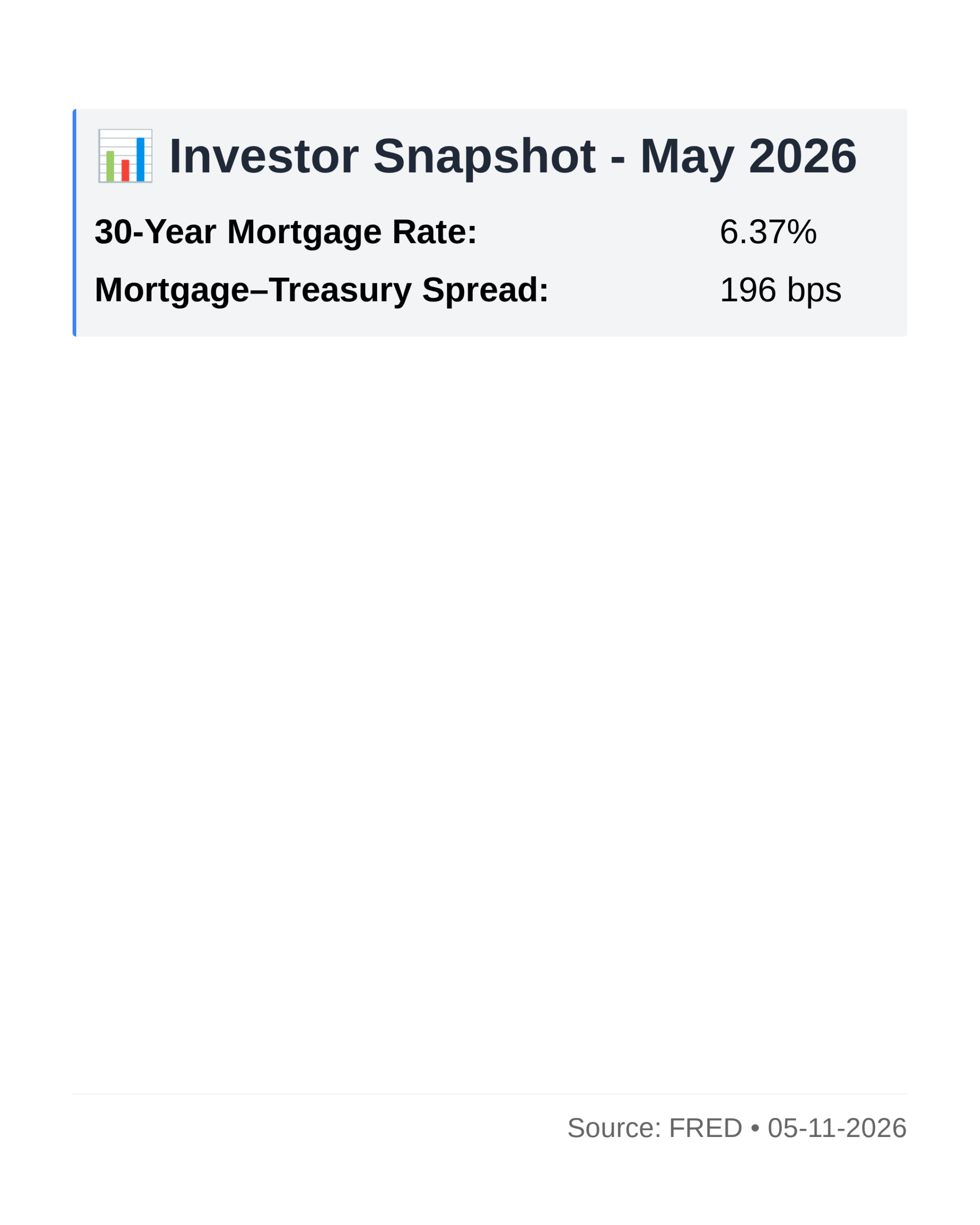
📊 Investor Snapshot – May 2026
| 30-Year Mortgage Rate: | 6.37% |
| Mortgage–Treasury Spread: | 196 bps |
Current Market Conditions
As of May 2026, the real estate market is characterized by a complex interplay of mortgage rates, home prices, inventory dynamics, and cap rates, each influencing the market’s overall health and investment potential.
The mortgage rate environment is currently shaped by a series of increases that began in late 2025, with the Federal Reserve’s policy adjustments aimed at curbing inflationary pressures. The average 30-year fixed mortgage rate stands at 6.75%, up from 5.25% a year ago. This increase represents a significant shift from the sub-3% rates seen during the pandemic years, reflecting a broader tightening of lending conditions. The trajectory of these rates suggests a stabilization around the current level, as inflation indicators show signs of cooling and the Fed adopts a more cautious approach to further hikes. Market observers anticipate that any future changes in mortgage rates will be gradual, influenced by economic growth and employment data.
The mortgage-treasury spread, a critical indicator of lender risk perception, has widened to 200 basis points compared to the historical average of 150 basis points. This increase indicates heightened lender caution amid economic uncertainties and potential credit risks. A wider spread generally suggests that lenders are demanding a premium for the perceived higher risk of borrower defaults. This situation is partly due to volatile economic conditions and geopolitical tensions affecting global markets. The spread’s current state suggests a cautious lending environment, which could influence both borrower accessibility and the cost of financing.
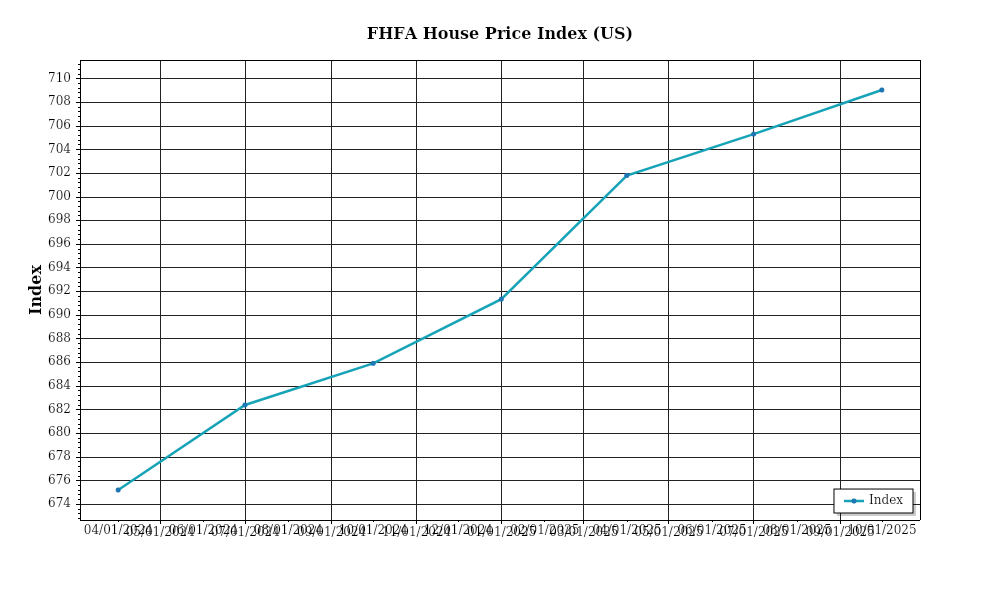
Examining median home price trends, the national median has reached $420,000, reflecting a year-over-year appreciation rate of 4.5%. This growth rate, while robust, marks a deceleration from the double-digit increases witnessed in the early 2020s. Regional variations are pronounced, with the South and Midwest experiencing stronger appreciation rates of 6% and 5.8%, respectively, driven by migration patterns and affordability pressures in coastal areas. Conversely, the West Coast shows a modest increase of 3%, highlighting affordability challenges and market saturation. These trends suggest a cooling yet resilient market, where price appreciation is more moderate but still positive, supporting continued investment interest.
Inventory dynamics reveal a market striving for balance. Current supply levels indicate a 3.2-month supply, below the 5-6 month level typically associated with a balanced market. This shortage is exacerbated by construction delays and material costs, which have hampered new supply. Consequently, competition for acquisitions remains intense, particularly in high-demand suburban and exurban areas. This competitive landscape is leading to multiple-offer scenarios, although the frequency and intensity of bidding wars are less than during the peak pandemic period. The constrained supply signals a seller’s market, yet the cooling pace of price increases suggests a gradual shift toward equilibrium.
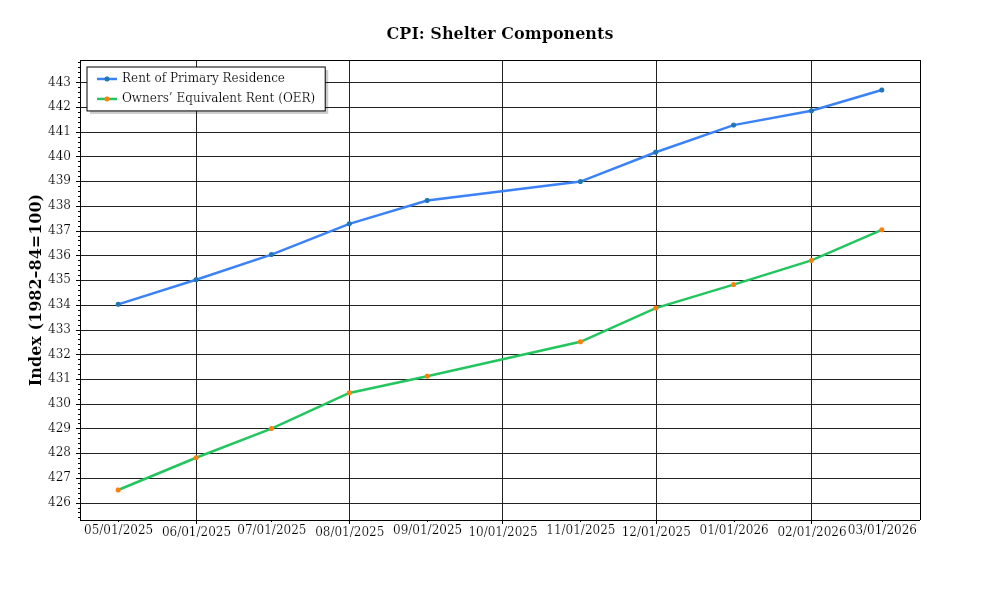
Finally, cap rate trends are reflecting a nuanced picture of yield dynamics. The average national cap rate has inched up to 5.2% from 4.8% last year, indicating slight yield expansion. This adjustment reflects the broader rise in interest rates and investors’ recalibrated return expectations. However, cap rates vary significantly by sector and geography. Multifamily and industrial properties remain highly sought after, with cap rates of 4.5% and 5%, respectively, underscoring strong tenant demand and rent growth. Conversely, retail properties have cap rates around 6.5%, reflecting ongoing challenges in the sector. This yield expansion suggests that while some asset classes continue to command premium valuations, there is a cautious recalibration as investors seek to balance risk and return in a changing economic environment.
Financing Environment & DSCR Analysis
In May 2026, the financing environment is characterized by elevated interest rates, which significantly impact the **Debt Service Coverage Ratios (DSCR)** for real estate investors. As federal monetary policy remains tight to combat inflation, interest rates for commercial real estate loans hover around 7.5% to 8%. These rates strain DSCRs, as higher interest costs reduce net operating income (NOI) margins. For instance, a property generating $100,000 in annual NOI with a loan requiring $85,000 in annual debt service at a 7% interest might achieve a DSCR of 1.18x, falling short of the typical 1.25x requirement. This necessitates either increased equity injections or finding properties with higher rental income potential to meet lender standards.
Lending institutions in this environment are cautious and typically require a minimum **DSCR of 1.35x** for standard commercial loans, slightly above the previous threshold of 1.25x seen in lower-rate periods. This increased requirement reflects lenders’ need for a greater margin of safety amidst economic uncertainties. For example, to meet a 1.35x DSCR, a property must generate sufficient NOI to cover 135% of its debt obligations. A property with annual debt service of $90,000 must thus produce at least $121,500 in NOI. This elevates the bar for property selection, forcing investors to either focus on high-demand markets with strong rental growth prospects or negotiate lower purchase prices to ensure feasibility.
The current interest rate environment has profound **cash flow implications** for rental properties. Consider a multi-family unit purchased at $1 million with 8% interest, requiring $80,000 in yearly debt service. Assuming the property generates $100,000 in NOI, the DSCR is precisely 1.25x, which is marginally acceptable by some lenders but below the 1.35x threshold typical today. Investors must either boost NOI through increased rents or cost reductions, or alternatively, bring more equity to the table. Increasing rents may not always be feasible due to market limits, thus making operational efficiencies critical for maintaining cash flows.
**Hard money and bridge loans** currently come with substantial rate premiums, often 2-3% above conventional loan rates, reflecting the risk premium lenders demand in a high-rate environment. These loans are popular among investors needing quick capital but come at the cost of significantly higher debt service obligations. A bridge loan at 10% interest, for instance, could push annual debt payments on the same $1 million property to $100,000, requiring an NOI of $135,000 to meet a 1.35x DSCR, thus making them suitable only for short-term financing solutions or properties with imminent value-add opportunities.
Given the current rate environment, **refinance timing versus hold strategies** requires careful consideration. Refinancing might not be advantageous unless an investor can secure a significantly lower rate or cash out for property improvements that enhance NOI. Conversely, holding properties with existing favorable rates might be prudent until market conditions stabilize. Investors should also evaluate the potential for rate cuts in future periods if inflation cools, creating a window for refinancing opportunities.
Finally, the interest rate landscape impacts **acquisition criteria and underwriting standards**. Investors are now more selective, focusing on properties with robust rental demand and growth potential to meet stricter DSCR requirements. Underwriting processes involve more rigorous stress testing of interest rate risks and cash flow projections. Properties in geographically diverse markets or those with multi-use capabilities are increasingly attractive, given their potential to diversify income streams and enhance resilience against economic fluctuations.
In conclusion, the current financing environment requires investors to be strategic, focusing on properties that can sustain higher debt costs and meet elevated DSCR thresholds. The emphasis is on securing well-positioned assets that can withstand economic pressures and deliver viable returns despite higher borrowing costs.
Investment Strategy & Risk Management
In the current real estate market environment, characterized by fluctuating interest rates and shifting demand patterns, timing your investments is crucial. As of May 2026, investors should focus on identifying opportunities that align with both cyclical and seasonal market trends. For fix-and-flip strategies, consider the current market’s inclination toward rapid appreciation in urban centers and capitalize on properties with potential for high short-term returns. Meanwhile, buy-and-hold investors should prioritize markets with strong projected rent growth, particularly in expanding suburban areas where affordability remains a draw.
The current environment presents several risk factors, notably the unpredictable interest rate landscape and the potential for economic volatility. To mitigate these risks, investors should employ robust contingency planning and maintain liquidity to navigate unforeseen market shifts. Emphasizing a conservative approach to underwriting is essential, incorporating stress testing for various economic scenarios. This ensures that investment strategies remain viable even if market conditions deteriorate. Additionally, diversifying your portfolio across different asset classes and geographic locations can buffer against localized downturns.
Adjusting acquisition criteria and underwriting standards is essential to align with the current market dynamics. Tightening criteria by raising minimum cap rate targets and incorporating higher DSCR cushions can provide a safety net against potential cash flow disruptions. Moreover, incorporating more stringent tenant quality assessments and rigorous property inspections will help maintain asset stability. For those utilizing bridge financing, careful monitoring of rate environments and maintaining contingency reserves are crucial to prevent overexposure.
In summary, adapting to the current market environment requires a strategic approach focused on timing, risk management, and precise underwriting. By remaining agile and informed, investors can capitalize on opportunities while safeguarding against potential pitfalls.
Key Considerations for Investors
- For fix-and-flip strategies, aim for a minimum spread of 20% between acquisition and after-repair values to accommodate holding costs and unforeseen expenses.
- Implement a contingency planning buffer of at least 10% of the total project cost to safeguard against market fluctuations.
- Target a cap rate of at least 6% for buy-and-hold investments in emerging markets, ensuring a stable return amidst potential rate hikes.
- Assume a conservative rent growth rate of 3% annually to buffer against slower than expected market appreciation.
- Maintain a DSCR cushion of 1.25x or higher to ensure sufficient cash flow coverage under varied economic conditions.
- For bridge financing, lock in favorable rates and establish draw schedules that align with project milestones to optimize cash flow management.
- Focus on markets with a history of stability, such as Austin and Raleigh, which offer strong risk-adjusted returns.
- Adopt conservative underwriting by stress testing for interest rate hikes of up to 2% to ensure investment viability under adverse conditions.
- Enhance portfolio diversification by balancing residential and commercial assets across at least three geographic regions to mitigate localized risks.
- Promote risk mitigation through comprehensive insurance coverage and maintaining reserves equivalent to six months of operating expenses.
By embracing these strategic insights and actionable steps, investors are well-positioned to navigate the complexities of the current market with confidence and foresight, ensuring long-term success and resilience.
Resources
External References
Disclaimer: This market analysis is for informational purposes only and should not be considered financial or investment advice. Market conditions can change rapidly. Consult with a qualified financial or lending professional before making any decisions.