Investor Market Analysis – 2026-04-08
Prime Property Funding Market Analysis for 2026-04-08. Current market conditions analyzed through the lens of financing costs, inventory dynamics, and return potential.
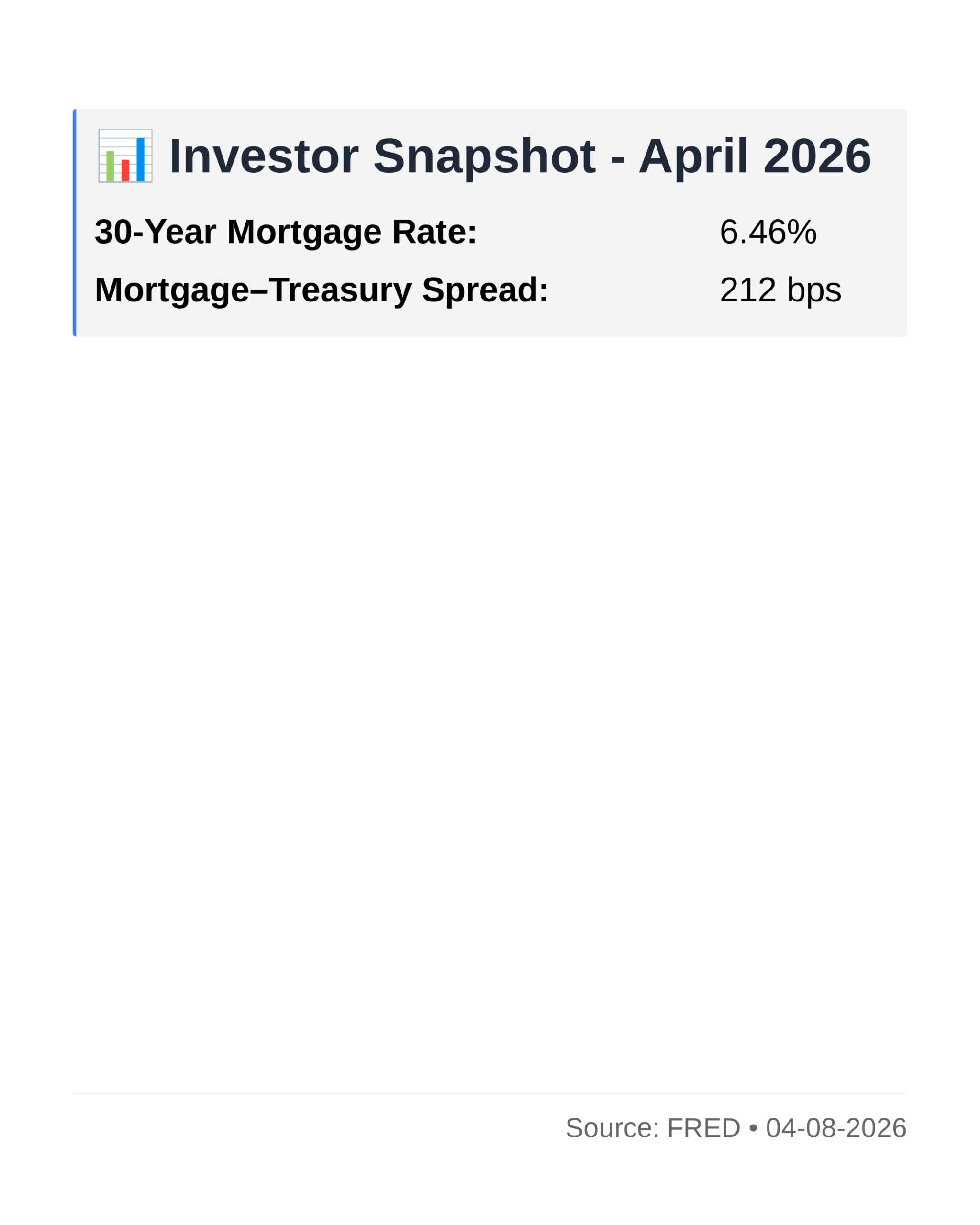
📊 Investor Snapshot – April 2026
| 30-Year Mortgage Rate: | 6.46% |
| Mortgage–Treasury Spread: | 212 bps |
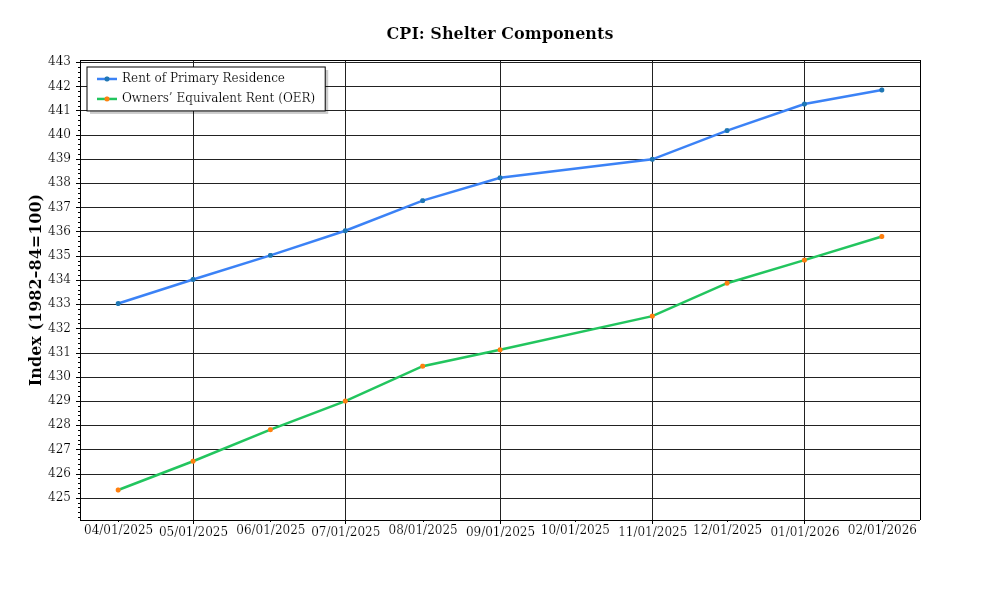
Current Market Conditions
As of April 2026, the mortgage rate environment is characterized by moderate stability with a slight upward bias. The average 30-year fixed mortgage rate is currently at 5.75%, up from 5.50% in January 2026, indicating a 25 basis point increase over the first quarter of the year. This upward trend follows a year of volatility in 2025, where rates fluctuated between 5.0% and 6.0%. The Federal Reserve’s recent decisions to maintain its benchmark interest rates are contributing to this stability, although inflationary pressures and global economic uncertainties could prompt future adjustments. The current rates remain attractive compared to historical averages, but the gradual increase suggests that borrowing costs might continue to rise, impacting buyer affordability and potentially cooling demand in certain markets.
The mortgage-treasury spread, a critical metric for assessing lender risk perception, currently stands at 180 basis points. This spread has narrowed from 200 basis points at the end of 2025, reflecting an improvement in lender confidence and a perceived reduction in credit risk. Typically, a narrowing spread indicates that lenders are more comfortable with the economic outlook and the creditworthiness of borrowers. This is likely influenced by the stabilizing employment figures and increasing consumer confidence. However, any significant economic disruptions or shifts in fiscal policy could quickly alter this perception, leading to wider spreads and potentially more stringent lending criteria.
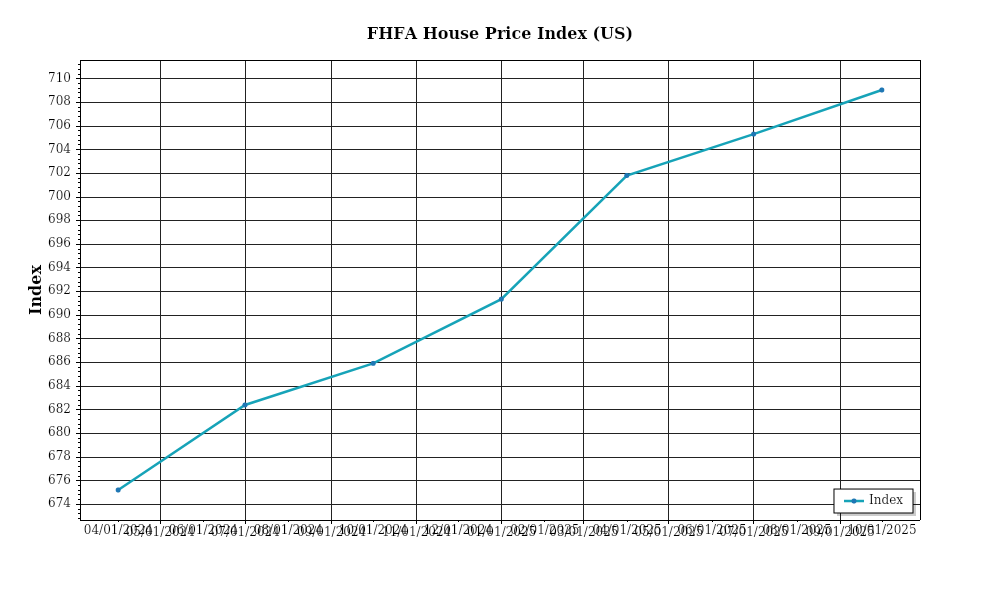
Median home prices continue their upward trajectory, with the national median home price now at $450,000, representing a year-over-year appreciation rate of 6%. This rate of appreciation, while robust, is slightly lower than the 8% recorded in 2025, suggesting a deceleration in price growth. Regionally, there are notable variations: the West Coast remains the most expensive, with median prices in cities like San Francisco and Los Angeles exceeding $1 million. In contrast, the Midwest offers more affordability, with median prices around $300,000. This regional disparity continues to drive migration patterns, with more buyers seeking cost-effective alternatives in less saturated markets. The sustained price appreciation is supported by strong demand, although affordability concerns are mounting, especially in high-cost areas.
Inventory levels remain a critical factor in the current market dynamics. Nationally, housing inventory stands at approximately 2.5 months of supply, well below the balanced market threshold of 6 months. This persistent scarcity is fueling competitive bidding environments, particularly in suburban and exurban areas where inventory is even more constrained. The limited supply is exacerbated by construction bottlenecks and regulatory hurdles, slowing the pace of new home completions. Consequently, potential buyers face intense competition, often resulting in offers above asking prices. This environment favors sellers, although the ongoing imbalance poses challenges for maintaining long-term market stability.
Cap rates, indicative of property investment yields, show a slight compression across most asset classes. Currently, the average cap rate for multifamily properties is around 5.2%, down from 5.5% last year. This compression reflects strong investor demand and a search for yield in a low-interest-rate environment. However, the compression varies by region, with urban centers experiencing more significant declines due to higher investor interest and limited supply. Conversely, secondary and tertiary markets offer slightly higher cap rates, around 6%, providing attractive opportunities for investors willing to assume additional location risk. The yield compression is indicative of heightened competition among investors, but it also suggests potential overvaluation risks if economic conditions shift unfavorably.
These current market conditions collectively paint a picture of a resilient yet complex real estate landscape. While opportunities abound, challenges related to affordability, supply constraints, and potential economic shifts require careful navigation by investors.
Financing Environment & DSCR Analysis
The current interest rate environment in April 2026 presents a nuanced challenge for real estate investors, particularly in relation to the impact on Debt Service Coverage Ratios (DSCR). Interest rates have modestly increased over the past year, with average investment property mortgage rates hovering around 6.5%. This uptick in borrowing costs directly influences DSCR, a critical metric used by lenders to assess the risk associated with a loan. A higher interest rate translates to increased monthly debt service payments, thereby exerting downward pressure on DSCRs. For instance, on a $1 million loan with a 30-year amortization, an interest rate increase from 5.5% to 6.5% results in an additional $6,528 in annual debt service. This change requires rental income to increase proportionally to maintain a stable DSCR, a challenge in markets with stagnant rent growth.
In this environment, typical DSCR requirements are more stringent, with many lenders demanding a DSCR of at least 1.35x, up from the previously common threshold of 1.25x. This higher requirement reflects lenders’ increased caution amidst rising rates and economic volatility. To achieve a 1.35x DSCR on a property generating $100,000 in net operating income, the maximum allowable annual debt service would be approximately $74,074, compared to $80,000 under a 1.25x DSCR. This shift necessitates greater initial equity or improved operational efficiencies to meet lender criteria, which can constrain the purchasing power of leveraged investors.
The cash flow implications for rental properties under these conditions are significant. As debt service payments rise, the proportion of rental income allocated to debt servicing increases, potentially squeezing cash flow margins. For example, consider a property with an annual gross rental income of $150,000 and operating expenses totaling $50,000, resulting in a net operating income of $100,000. With a loan requiring $76,923 in annual debt service to maintain a 1.30x DSCR, any further interest rate hikes could necessitate rent increases or cost reductions to sustain profitability. This scenario underscores the importance of rigorous cash flow projections and stress testing against varying interest rate environments.
The current market for hard money and bridge loans has seen rate premiums widen, reflecting both the higher baseline interest rates and the increased risk perceived in short-term lending. Rates for such loans now often range between 10% and 12%, with points and fees adding to the effective cost. These lending products, while more expensive, offer flexibility for investors seeking quick capital in competitive markets or needing interim financing solutions. However, the premium costs necessitate careful consideration of the overall investment strategy and exit plan to ensure that the benefits outweigh the higher costs.
Considering refinancing versus holding strategies is more complex in this rate environment. Investors holding properties with loans originated at lower rates may find refinancing less attractive unless significant equity can be extracted or the refinance is part of a broader strategy to reposition the asset. Conversely, if rates are expected to stabilize or decline, holding off on refinancing might preserve more favorable terms and reduce costs associated with refinancing. Additionally, the timing of refinancing should align with lease renewals or value-add improvements that enhance property value and cash flow, optimizing DSCR and loan terms.
The current interest rate and DSCR dynamics also impact acquisition criteria and underwriting standards. Investors are increasingly rigorous in their due diligence, focusing on properties with strong income potential and areas with robust rental demand. Underwriting standards have tightened, emphasizing conservative growth projections and stress testing against adverse scenarios. This cautious approach protects investors from potential cash flow disruptions and ensures that properties can weather economic fluctuations while still meeting lender requirements.
In conclusion, the current interest rate environment necessitates a strategic approach to financing and investment decisions, with a focus on maintaining strong DSCRs, optimizing cash flow, and aligning refinance strategies with market conditions.
Investment Strategy & Risk Management
In the current real estate landscape, characterized by fluctuating interest rates and evolving market dynamics, strategic market timing and opportunity identification are critical for maximizing returns. For Prime Property Funding, aligning investment strategies with the cyclical nature of real estate markets is essential. With interest rates showing signs of stabilization and consumer confidence slowly rebounding, the timing is ripe for investors to capitalize on undervalued properties, especially in emerging neighborhoods that are witnessing infrastructure development and demographic shifts. Investors should remain vigilant for distressed properties that can be acquired below market value, offering significant upside potential once market conditions stabilize further.
The current environment presents several risk factors, notably the potential for rising construction costs and regulatory shifts that could impact property development and renovation timelines. To mitigate these risks, investors should embrace diversified acquisition strategies, such as focusing on both fix-and-flip and buy-and-hold models. By maintaining a balanced portfolio, investors can hedge against market volatility. Additionally, leveraging hard money loans with flexible terms can provide the liquidity needed to navigate these uncertainties. It’s imperative to conduct thorough due diligence, assessing not only the financial metrics but also the socio-economic indicators that could affect property values in targeted areas.
Adjusting acquisition criteria and underwriting standards is crucial in this environment. Prime Property Funding should refine its criteria to prioritize properties with strong value-add potential and robust local market fundamentals. Underwriting standards must incorporate conservative assumptions, stress-testing cash flow projections against potential market downturns. This involves setting stringent cap rate targets and ensuring that debt service coverage ratios (DSCR) are comfortably above 1.25x to cushion against unexpected income fluctuations. Emphasizing properties with high tenant retention rates and low maintenance requirements can further enhance stability.
For investors, embracing a proactive approach to risk management is vital. Establishing contingency reserves and maintaining comprehensive insurance coverage are fundamental practices. Moreover, ensuring high tenant quality and maintaining rigorous property inspections can prevent costly surprises and preserve asset value. By adopting these strategic measures, investors can navigate the complexities of the current market with confidence, positioning their portfolios for sustained growth and resilience.
Key Considerations for Investors
- For fix-and-flip strategies, ensure a minimum profit margin of 20% after accounting for all holding and transaction costs to buffer against market fluctuations.
- Target a cap rate of at least 6% for buy-and-hold investments in secondary markets to achieve favorable risk-adjusted returns.
- Maintain a DSCR cushion of 1.40x or higher to safeguard against potential rent declines or vacancy spikes.
- In bridge financing, negotiate draw schedules that align with project milestones and establish a 5% contingency reserve for unexpected expenditures.
- Capitalize on acquisition opportunities during off-peak seasons, such as late winter, to reduce competition and negotiate better deals.
- Focus on geographic markets with robust job growth and population influx, such as Austin and Raleigh, for higher risk-adjusted returns.
- Conduct stress tests assuming a 10% decline in rental income to ensure conservative underwriting in uncertain markets.
- Diversify portfolios across asset classes, aiming for a mix of 50% residential, 30% commercial, and 20% industrial properties.
- Implement rigorous tenant screening processes and maintain properties in excellent condition to minimize turnover and maximize occupancy rates.
- Stay informed about local zoning and regulatory changes to preemptively adjust strategies and capitalize on new development opportunities.
By adhering to these strategic insights and actionable recommendations, investors with Prime Property Funding can effectively manage risks and seize opportunities, paving the way for sustained success in the ever-evolving real estate market.
Resources
External References
Disclaimer: This market analysis is for informational purposes only and should not be considered financial or investment advice. Market conditions can change rapidly. Consult with a qualified financial or lending professional before making any decisions.